
Nikro Air Duct Cleaning in Tempe: A Homeowner’s Guide
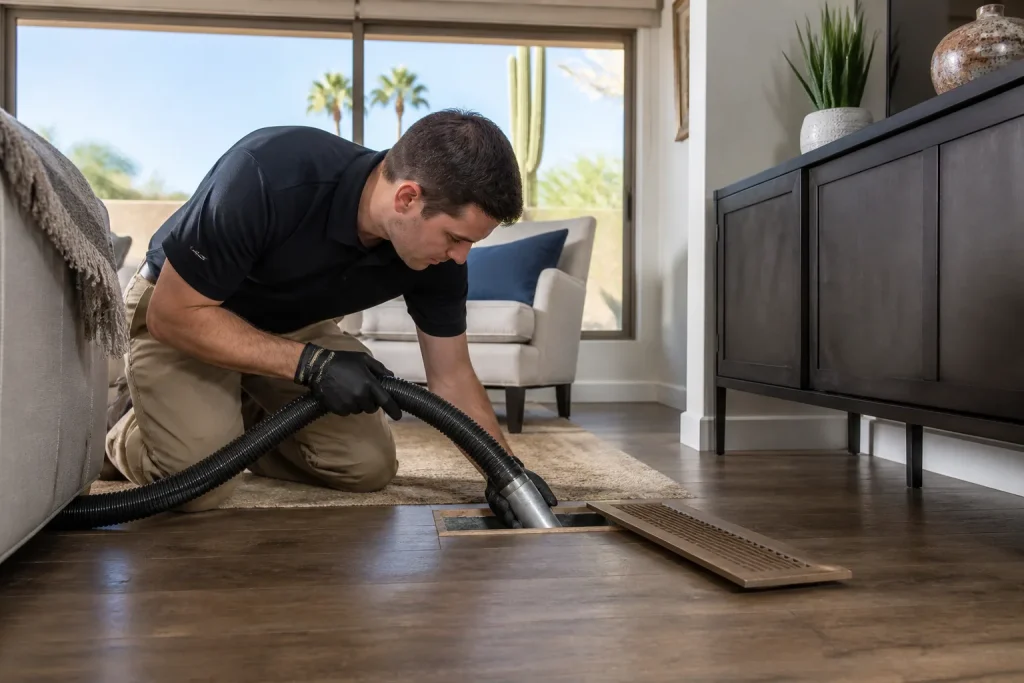
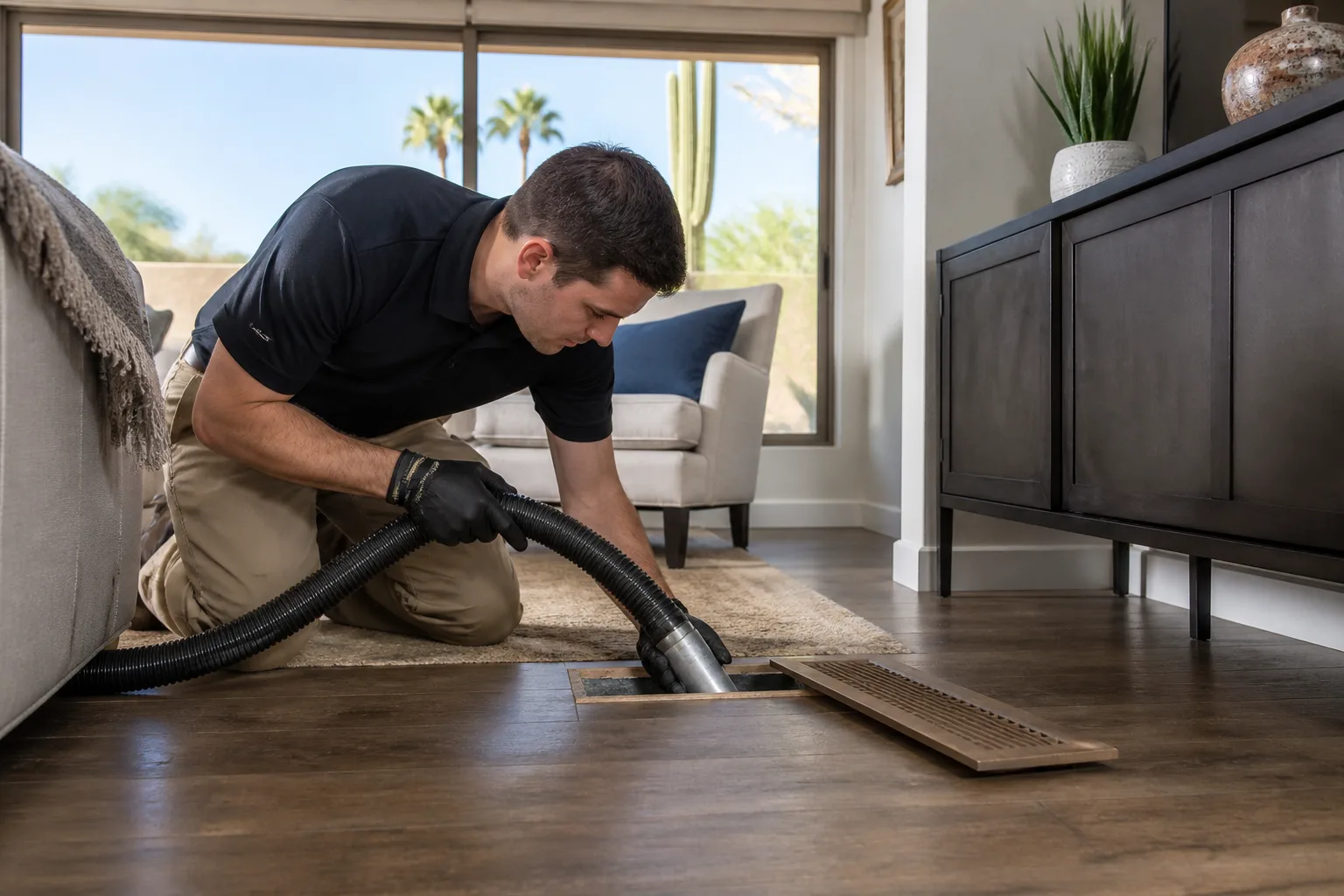
Most homeowners judge a duct cleaning by what comes out of the vents. That’s the wrong place to look. The real work happens inside the machine, and specifically at the point where contaminated air enters the collection unit. A Nikro negative-air system is built around that moment. It pulls a sustained volume of air out of the duct system and holds it, so debris is captured into the machine instead of drifting into your living room. If you’ve ever watched a technician run a shop vac into a supply register and thought “where is all that dust going,” you already understand the problem Nikro equipment is engineered to solve. If you’d rather not sort through equipment specs yourself, call (866) 261-1801 and we’ll walk you through what a real cleaning involves.
What Is the Nikro Negative-Pressure System, Exactly?
The Nikro system is a high-volume negative-air machine that turns your duct system into a controlled vacuum. It connects to the ductwork and pulls air out continuously while a technician works the branches from the inside. The critical number is CFM, or cubic feet per minute, measured at the collection point. That’s the airflow the machine can hold steady while brushes are moving through the ducts. A machine with weak CFM at the collection point can’t capture what a brush dislodges, so debris settles back onto the duct walls or escapes into the room. Strong CFM keeps a constant inward pull on the whole system.
What separates this from a portable shop vac rig is the sustained pressure, not just suction at the nozzle. A shop vac creates airflow at its hose tip and drops off the moment the hose is deep in a branch run. A negative-air machine holds pressure across the entire duct system for the length of the job. That’s why equipment class matters more than how many brushes a company carries. Homeowners in Tempe comparing quotes should ask what the collection machine is and what CFM it holds, not how many vents get counted.
- Shop vac setup: momentary suction at the hose, no sustained system pressure
- Nikro negative-air setup: continuous CFM draw at the collection point for the whole job
- Why it matters: what gets dislodged has to go somewhere, and the machine decides where
Why Nikro Needs Rotobrush, and Vice Versa
Nikro is the extraction half of a two-part method. Rotobrush is the agitation half. A rotary brush physically scrubs the duct walls, breaking the bond between settled debris and the metal or flex surface. Without agitation, a negative-air machine pulls only what’s loose, and fine dust bonded to duct walls stays put. Without extraction running at the same time, a brush loosens debris into the air stream and it redistributes through the house. One without the other is an incomplete clean.
That’s why our technicians run both simultaneously. The Rotobrush rotary brush dislodges the contamination, the Nikro machine captures it at the source, and the two stay in sync for the duration rather than running as separate stages. In Tempe, where fine desert dust settles into return ducts over a season, mechanical agitation is what makes that layer release at all. A machine alone can’t scrub it, and a brush alone has nowhere to put it. When a homeowner asks why a cheap cleaning didn’t seem to change anything, this is usually the answer: agitation happened, extraction didn’t.
What Abatement Technologies Containment Adds to a Tempe Cleaning
Abatement Technologies air filtration units run during the job, not after it. They’re the same equipment class used in mold and remediation work, where containing airborne particles is the whole point. In a residential duct cleaning, that means HEPA-rated filtration catching fine particles that pass through lower-grade filters, including the sub-micron dust that tends to stay airborne longest. A standard shop vac rig sends its exhaust somewhere in your home. A HEPA-rated containment unit scrubs it before it reaches the room.
In Tempe, this matters more than most homeowners realize. The local dust load is fine and it’s persistent. Spring wind events push material into every return, and remodeling projects add drywall dust that finds duct joints. Rodent activity in attics is another one, and rodent material is exactly what you don’t want blown around during a cleaning. Containment plus negative pressure plus filtration keeps that material headed into the machine. If your home already runs an air duct cleaning visit, ask whether filtration runs during the job or only before and after. The answer tells you whether the company understands the method.
What You Should Actually See and Hear During a Nikro Cleaning
Observable indicators matter because duct cleaning has a reputation problem: too many homeowners can’t tell whether the work happened. A proper Nikro job produces specific evidence. Here’s what a homeowner should notice.
- The machine runs continuously. The negative-air unit stays on from setup to finish. It doesn’t cycle off between branches.
- You hear brush rotation. The rotary brush makes a steady whir at the register, distinct from the deep tone of the collection machine.
- The collection canister fills visibly. You should be shown what came out. Before-and-after photos or a look at the canister contents are reasonable asks.
- Surface protection goes down first. Guardsman products protect floors and furnishings, because a job this thorough shouldn’t cost you a rug.
- No dust plume in the room. If the air in your living space gets hazy during the cleaning, containment isn’t working.
Our technicians have up to 10 years of experience and know what a properly running system looks and sounds like. If a company won’t show you the setup or the canister, treat that as a warning. For a broader look at what a complete visit covers in Tempe, we’ve written about it in detail.
Where Nikro Extraction Makes the Biggest Difference in Tempe Homes
The clearest performance gap shows up with contamination that’s fine, bonded, or hazardous to breathe. Coarse dust from typical household use is easy for most equipment. Three categories in Tempe homes are not.
Fine desert dust settles into return ducts as a thin, bonded film. Agitation releases it, but only strong extraction keeps it from re-settling or entering the room. This is where CFM at the collection point outperforms a shop vac every time.
Construction debris from remodeling, drywall work, or a recent addition includes particles small enough to hang in the air for hours. HEPA-rated containment is the difference between capturing them and redistributing them.
Rodent material in attic duct runs is the risk homeowners most often underestimate. Negative pressure captures it into the machine; a leaky setup sends it into the living space. If you’ve noticed any sign of rodents near your ductwork, that’s a job for professional containment, not a rental unit.
Dryer vents are the other place where proper equipment matters, and not for dust reasons. Lint buildup in a dryer vent is a genuine fire risk, which is why we treat dryer vent cleaning as a separate service with its own urgency. If your dryer takes two cycles to finish a normal load, that’s the signal.
When to Call a Pro Instead of Reading Further
Some symptoms point clearly to compromised ductwork rather than accumulated dust, and someone needs to look at the actual ductwork, not just clean it. Watch for these:
- Uneven airflow between rooms, where one end of the house is always too warm or too cold
- A musty smell that returns within days of a cleaning
- Visible crushed, torn, or disconnected flex duct in an attic or crawlspace
- Rising energy bills with no other explanation
Clean ducts are the starting point, and the right filtration keeps them that way. That’s why we work with Honeywell and Aprilaire equipment for post-cleaning filtration recommendations, so a clean system stays clean. And when the inspection turns up a torn duct run, we repair it rather than handing you a report and walking away.
Related services in Tempe: duct cleaning, dryer vent cleaning, and air duct repair. If your symptoms point to a specific problem, our duct cleaning Tempe page covers the full scope of what a visit involves.
The Bottom Line
Nikro equipment isn’t a marketing upgrade. It’s a specific class of negative-pressure machine built around the extraction half of a two-part method, and it only works paired with Rotobrush agitation. Together they dislodge what’s bonded and capture what’s released, so nothing ends up back in your living room. Abatement Technologies containment adds HEPA-rated filtration during the job, which matters most in a Tempe home carrying fine dust, remodeling debris, or rodent material in the ducts. Ask any company you’re considering what their collection machine holds in CFM. It’s a more useful question than how many vents they’ll count.
If you’re in Tempe and want an honest assessment of your ductwork, we offer free estimates. Call (866) 261-1801. We answer 24/7. Fast dispatch from 7am to 7pm, Sunday through Friday.
Frequently Asked Questions
Yes, and the difference is sustained negative pressure measured in CFM at the collection point. A shop vac produces momentary suction at its hose tip and loses effectiveness deep in a duct run. A Nikro negative-air machine holds a continuous draw across the whole system for the length of the job, which means debris dislodged by the brush gets captured rather than redistributed. If you’ve had a cleaning that didn’t seem to change anything, weak extraction is usually the reason. Call (866) 261-1801 for a free estimate and we’ll explain what a proper setup looks like.
Cheap quotes usually reflect cheaper equipment, and the equipment determines whether the job actually removes contamination. A company running a portable unit and counting vents has far lower overhead than one running a negative-air machine with rotary brush agitation and HEPA-rated containment. That’s a real cost difference, not a markup. Ask what machine they use and whether filtration runs during the job. The answer belongs in any written estimate you accept, so you know what you’re actually buying. Call (866) 261-1801 if you’d like ours in writing before you commit.
You should see the setup, hear the brush running, and be shown what came out of the system. Ask for before-and-after photos of your own ducts, not stock images. A company running a real Nikro and Rotobrush setup has nothing to hide in the process; the machine is on, the canister fills, and the evidence is in front of you. If a technician won’t show you the collection unit when you ask, treat it as a sign. Call (866) 261-1801 for a free estimate with a clear scope.
Most homes don’t need an annual cleaning; a schedule every few years is a reasonable baseline. Tempe conditions can shorten that: heavy seasonal dust, recent remodeling, pets, or any sign of rodent activity in attic ductwork all point to a closer interval. A dryer vent is a different matter and should be checked more often, since lint buildup is a fire risk rather than a comfort issue. If you’re unsure which applies to your home, call (866) 261-1801 and we’ll help you figure out a sensible interval.
Written by the team at Duct Cleaning Tempe.
Need Air Duct Cleaning Help?
Call Duct Cleaning Tempe - licensed & insured, here with fast help in Tempe.
(866) 261-1801