
How to Choose the Right Air Duct Cleaning Company in Tempe
A NADCA membership card and a five-star Google rating tell you almost nothing about whether the company that shows up owns the equipment to actually clean your ducts. A shop vac and a flex brush can earn both. Choosing a duct cleaning company in Tempe comes down to one thing most homeowners have no framework for: verifying that the company’s equipment matches the scope of work your system actually requires. Here’s how to do that check before anyone sets foot in your house.
If you’d rather skip the research and talk to someone who uses contractor-grade gear, call (866) 261-1801 for a free estimate.
Why “Best Air Duct Cleaning Company Tempe AZ” Searches Go Wrong
Most people searching for the best air duct cleaning company in Tempe end up comparing the wrong things. They weigh star ratings, years on a map listing, and the lowest quote in their inbox. None of those signals tell you what method a company uses inside your ductwork. The industry’s bait-and-switch reputation exists for a reason: a low teaser price that balloons once the technician is on site is common, and it happens whether the company has four reviews or four hundred.
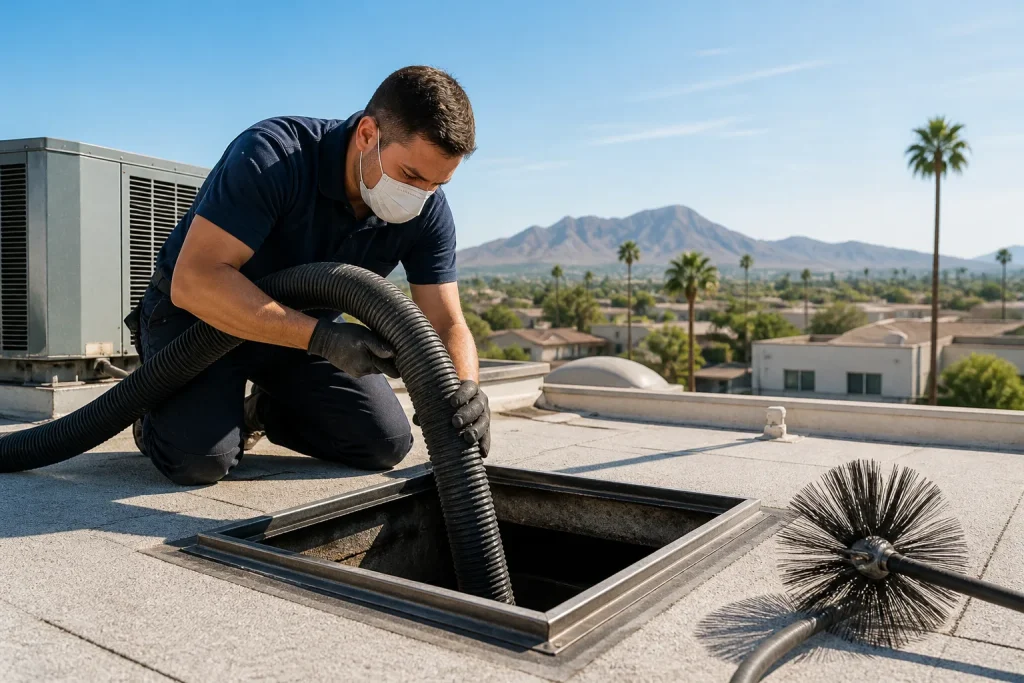
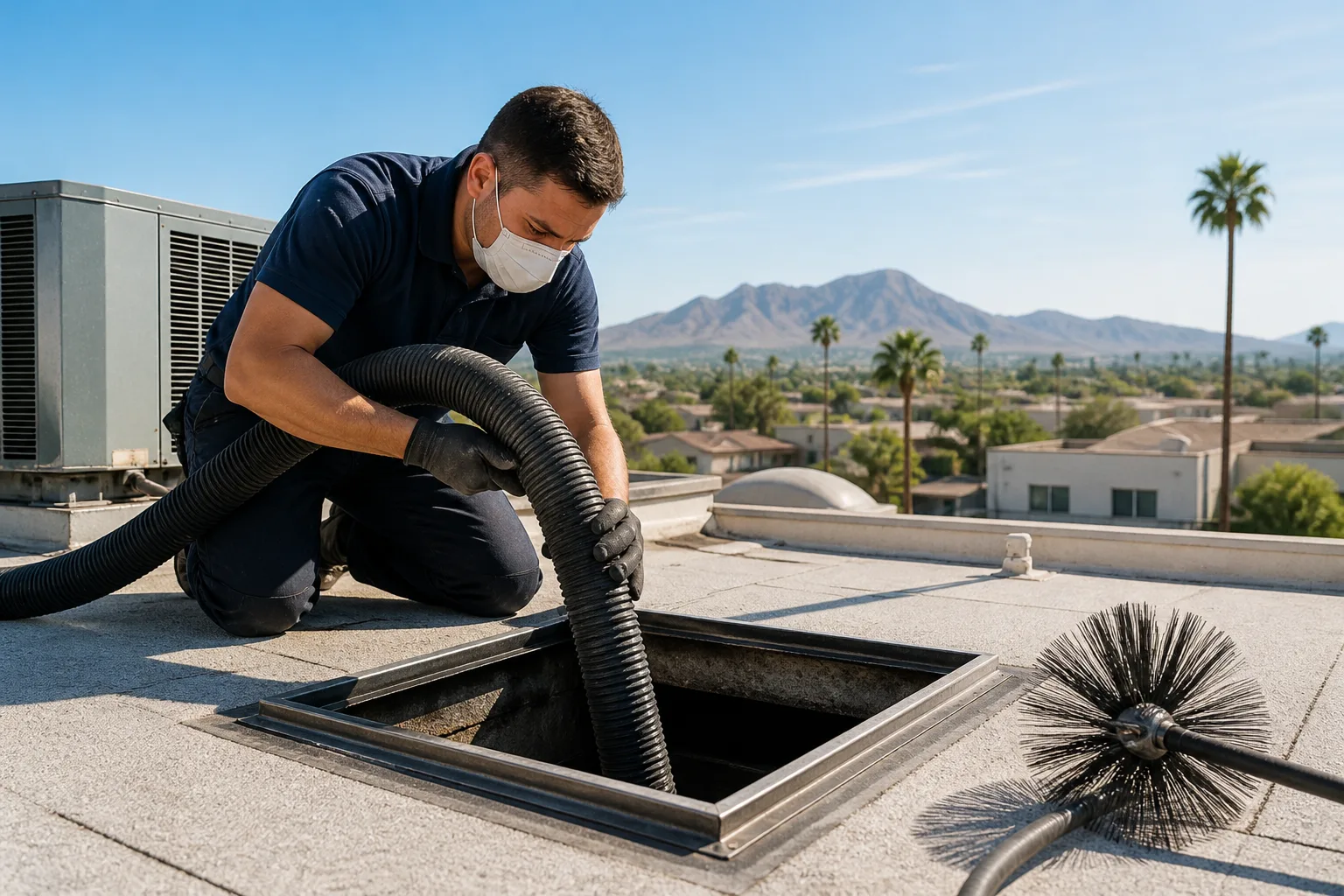
What actually separates a competent duct cleaner from a cheap one is the collection system. Air duct cleaning works through two things working together: mechanical agitation to dislodge the debris stuck to the walls, and negative air pressure to capture it before it settles back into your living room. Miss either part and you’ve paid to redistribute dust, not remove it.
Here’s the mental shift worth making: don’t ask who’s the best. Ask who’s equipped for your system.
- Contact method: a rotary brush or compressed-air whip, not a handheld vac
- Collection: a HEPA-filtered negative-air machine running the whole time
- Containment: drop cloths and surface protection on floors and furnishings
- Scope: the ability to repair what they find, not just report it
The Equipment Questions to Ask Before You Book
Ask these three questions on the phone and listen for specifics, not adjectives. A company that owns professional equipment can answer them without hesitation.
1. What collection system do you use? You’re listening for a brand or a type. Rotary-brush systems like Rotobrush agitate the duct walls mechanically, and negative-air machines such as Nikro pull the loosened debris into a sealed HEPA-filtered container. We run that combination because it physically dislodges and captures debris rather than blowing it around.
2. What CFM does your collection unit run at? CFM is airflow, and it matters. A machine with too little pull can’t keep debris suspended while the brush is working. A company that can’t name a figure is likely running consumer equipment.
3. Do you hold negative pressure the entire time? The answer should be yes, from setup to teardown. If the vacuum shuts off while the brush is still spinning, dust escapes into the room. This is also where containment equipment separates the serious operators: Abatement Technologies air filtration units are the same equipment class used in mold and remediation projects, and that’s the standard we hold ourselves to.
If a company can’t answer these in plain language, that’s your answer. A reputable outfit will be glad you asked. In our experience, it’s the ones who get defensive about equipment questions who have something to hide.
See how a professional-grade air duct cleaning visit is scoped component by component.
How to Read a Quote Like a Contractor
The structure of a quote tells you how a company thinks. A flat-rate “whole house” price with no breakdown, or a per-register charge, are both red flags. Per-vent pricing punishes you for having more registers than the next house while rewarding the company for doing less per vent. Flat-rate pricing hides what you’re actually buying.
What you want is an itemized estimate broken out by system component:
- Main trunk line cleaning
- Branch runs and individual duct runs
- Supply and return registers and grilles
- The air handler cabinet and blower area
- Dryer vent, quoted separately if you’re bundling it
Each line should carry a range and a note on what it includes. One flat price per system, agreed before work starts, is the model that protects you. When a company can itemize, they’ve already thought about the layout of your particular home, and you have something in writing that sets the final price. No surprise line items once the truck arrives.
Watch for quotes that price per vent and then add “extra” for returns, or that quote only the supply side. Returns collect just as much, often more.
What NADCA Certification Actually Certifies
NADCA certification is real and useful, but it isn’t the whole picture. What it tells you: the company has committed to an industry standard for source removal, and someone on staff has taken training tied to the NADCA assessment, cleaning, and restoration protocol. What it doesn’t tell you: which equipment they’ll use in your home, whether they hold negative pressure throughout, or whether they can repair compromised ductwork rather than just hand you a report.
Certification is a starting filter, not the finish line. Two additional signals indicate remediation-grade capability:
- Abatement Technologies equipment and training: this is containment equipment built for mold and remediation work. If a company uses it, they understand that cleaning isn’t just vacuuming, it’s controlling dust migration through the whole job.
- IICRC credentials: the standard-setting body behind restoration work, worth asking about because it signals the crew has been trained to handle contained, controlled environments, not just routine maintenance.
Ask for both, and ask what happens when the inspection finds a disconnected joint, a crushed section of flex, or a collapsed run. A company that can’t repair what it finds leaves you coordinating a second contractor. We offer air duct repair as a named service precisely so the job doesn’t end at a recommendation. In Tempe, where a lot of ductwork is original to the house, that repair capability matters more than the cleaning itself.
Why Tempe’s Housing Stock Creates Specific Challenges
Tempe’s residential neighborhoods run from the tract homes built through the 1970s and 2000s, and that regional housing stock creates ductwork problems a generalist cleaning company may not be equipped to handle. Flex duct construction was the norm across much of that period, and flex is unforgiving: it sags, it tears at the connection points, and it collects dust in the low points of every run. A rotary brush run correctly through flex brings the debris out. Run carelessly, it can damage the inner liner.
Flat rooflines and low attic clearances are another local reality. Duct runs in these homes are often tight, hard to access, and routed around structure. A crew that shows up with a handheld vac and a single hose has no way to hold negative pressure and reach the far end of a long run at the same time.
The dry climate here also changes what settles in the system. Fine dust accumulates fast, and when the system kicks on, that dust moves through the house with it. Homeowners here often notice uneven airflow from room to room before they notice anything else.
We’ve seen plenty of jobs where the real problem wasn’t dust at all. It was a crushed run behind a cabinet or a disconnected joint that had been quietly dumping conditioned air into the attic for years. That’s why we repair what we find and why we walk the system before we clean it.
When to call a pro
If you’re seeing dust trails at the registers right after cleaning, smelling something musty when the system starts, or noticing rooms that never get the airflow they used to, those are symptoms worth a diagnosis, not a guess. The same goes for a dryer that takes two cycles to finish a load. A clogged dryer vent cleaning visit is a fire-safety issue, not a maintenance afterthought, and a generalist duct cleaner often won’t touch it on the same visit.
The Five-Question Pre-Hire Script
Before anyone schedules a visit to your Tempe house, run through these five questions on the phone. It takes four minutes and filters out bait-and-switch operators before they knock on your door.
- “What collection system and CFM does your equipment run?” Listen for a rotary-brush or whip method and a negative-air machine. Silence or vagueness is a pass.
- “Do you hold negative pressure for the entire job?” The answer should be an unqualified yes.
- “Can you send me an itemized estimate by component before I book?” A flat rate or per-vent price without a breakdown is a red flag. A written, itemized estimate is your protection.
- “Do you offer air duct repair, or just cleaning?” If they can only clean, ask what they do when they find damaged flex or a disconnected joint. “We’ll note it in the report” means you’re hiring a second contractor.
- “What credentials does the crew hold, and can you tell me what they cover?” NADCA is a start. Abatement Technologies training and IICRC credentials indicate remediation-grade capability.
Bonus question: “What surface protection do you bring?” Guardsman products and proper drop cloths tell you the company treats your home like a professional job site, not a quick stop.
These five answers tell you more than any review count. For a broader look at what a full duct cleaning Tempe service involves, our service page walks through the process end to end.
Clean Ducts Are the Starting Point, Not the Finish
Once your ducts are clean, the next question is what keeps them that way. Post-cleaning, filtration upgrades are worth a conversation. We work with Honeywell and Aprilaire equipment, two of the most trusted names in whole-home air quality, because the right filter setup does more for long-term air quality than another cleaning six months out. It’s also a much cheaper upgrade than most homeowners expect.
A cleaning company that walks away at the end of the job without a word about filtration is a company that sold you a service, not a solution. The good ones talk about what comes next.
The Bottom Line
Choosing the right air duct cleaning company in Tempe is an equipment-matching problem, not a popularity contest. Ask what collection system they run, how much airflow it pulls, and whether negative pressure holds through the whole job. Demand an itemized estimate and one flat price per system agreed before work starts. Check that they can repair what they find, not just report it. And ask about remediation-grade containment, because a company set up for mold work doesn’t leave dust behind in your kitchen.
The right company will welcome these questions. If you’re in Tempe and want a straight answer on what your system needs, Duct Cleaning Tempe offers free estimates. Call (866) 261-1801. We answer 24/7. Fast dispatch from 7am to 7pm, Sunday through Friday. Our technicians have up to 10 years of experience, and we hold ourselves to professional-grade equipment, not consumer shortcuts, on every job.
Frequently Asked Questions
A whole-system cleaning in Tempe typically runs in a range that reflects the size of the home and the number of runs, not a per-vent rate. Any company quoting a flat teaser price up front is likely to add line items once they’re on site. Ask for an itemized estimate by component and one flat price per system agreed before work starts, so the written estimate sets the final price. Call (866) 261-1801 for a free estimate.
Cheap quotes usually mean consumer-grade equipment, no sustained negative pressure, or per-vent pricing that hides the real total. A shop vac can’t hold the airflow needed to keep debris suspended, so the work gets done poorly and repeated sooner. You’re not comparing two prices for the same job; you’re comparing two very different jobs. Call (866) 261-1801 to talk through what a legitimate whole-system estimate looks like for your home.
Ask for before-and-after photos of your own ducts and registers, not stock images. A company using negative-air equipment can show you what came out of the system and what the runs look like after cleaning. If they can’t produce photos of your actual ductwork, that’s a sign to ask more questions. Call (866) 261-1801 and we’ll walk you through what the process looks like step by step.
Most homes benefit from a professional cleaning every few years, sooner if you’ve had recent renovation dust, pets, or visible debris at the registers. In Tempe’s dry climate, fine dust accumulates quickly, so homes with more foot traffic tend to need it more often. Rather than guess, ask a technician to inspect and give you an honest read on your specific system. Call (866) 261-1801 for a free estimate.
Written by the team at Duct Cleaning Tempe.
Need Air Duct Cleaning Help?
Call Duct Cleaning Tempe - licensed & insured, here with fast help in Tempe.
(866) 261-1801