
Last updated November 15, 2026
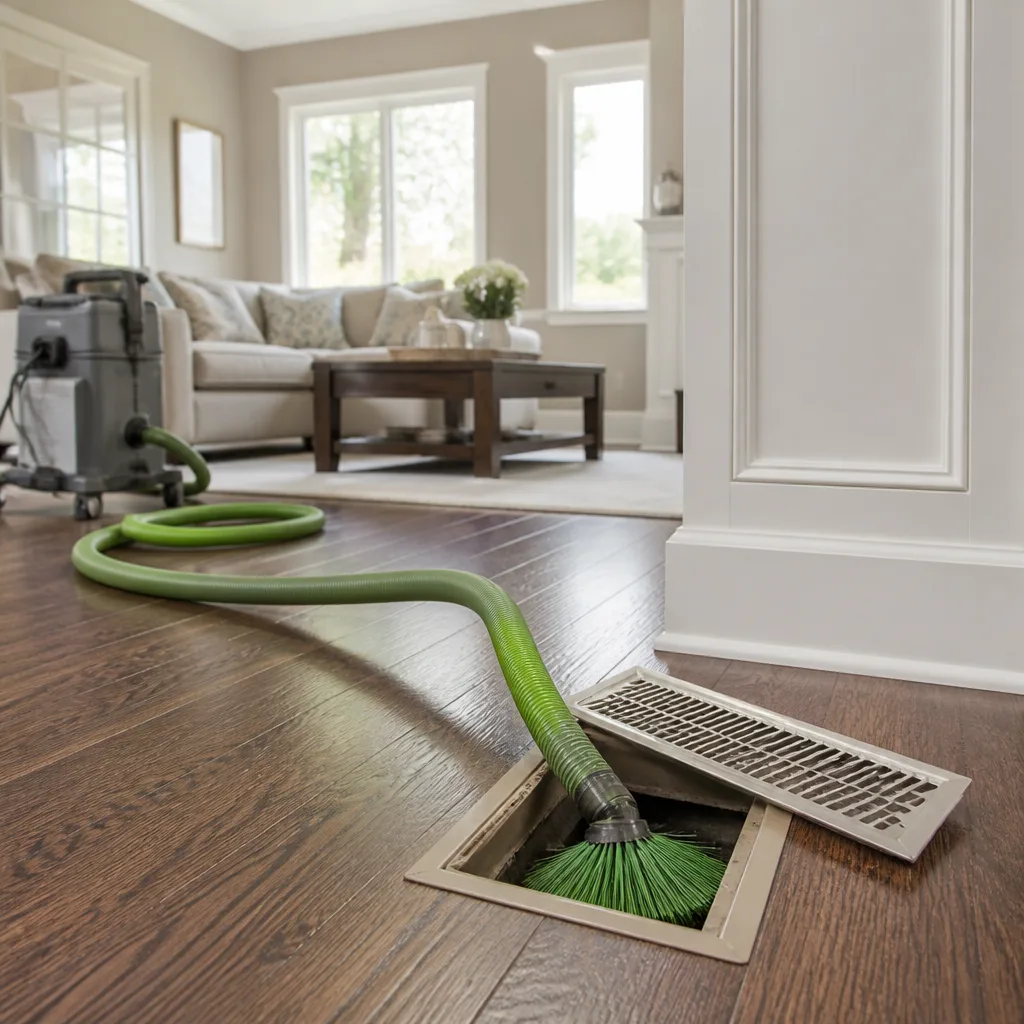 Whole-home duct cleaning
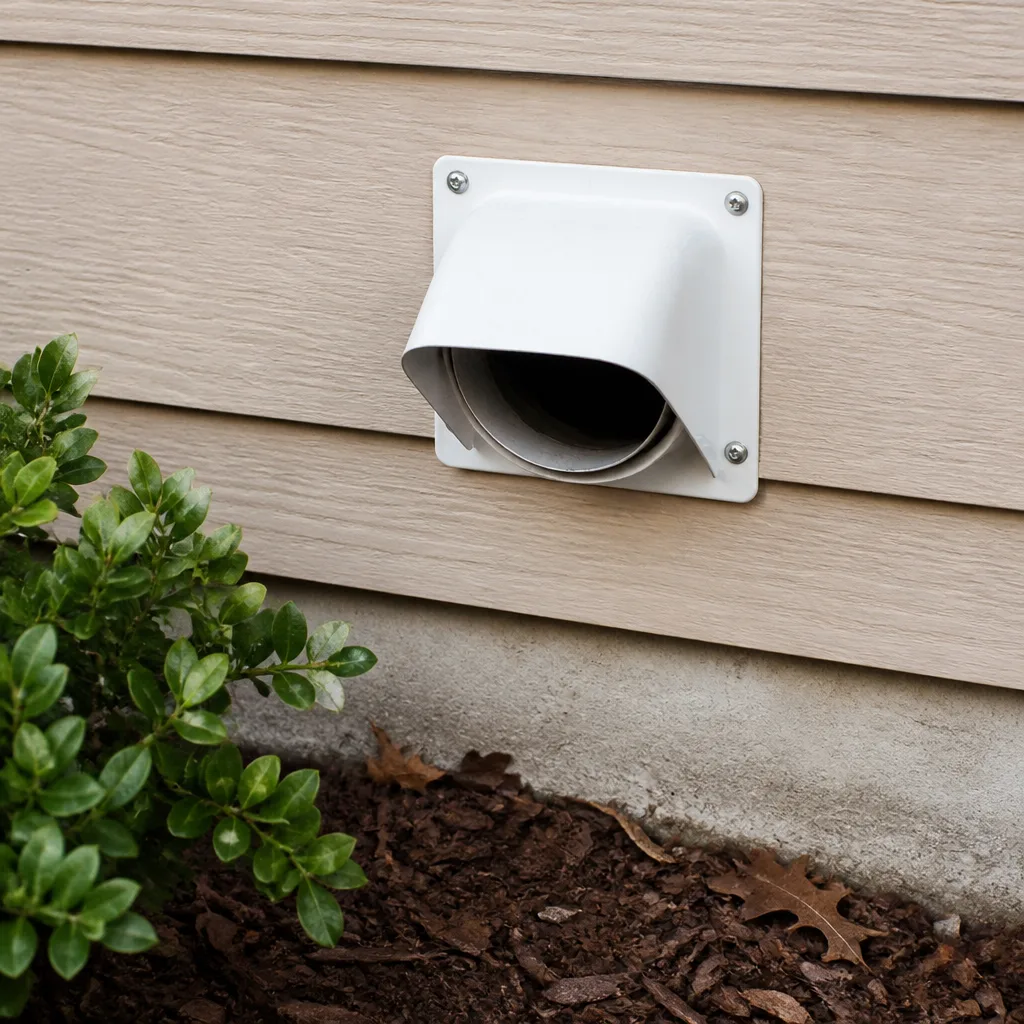 Dryer vent cleaning
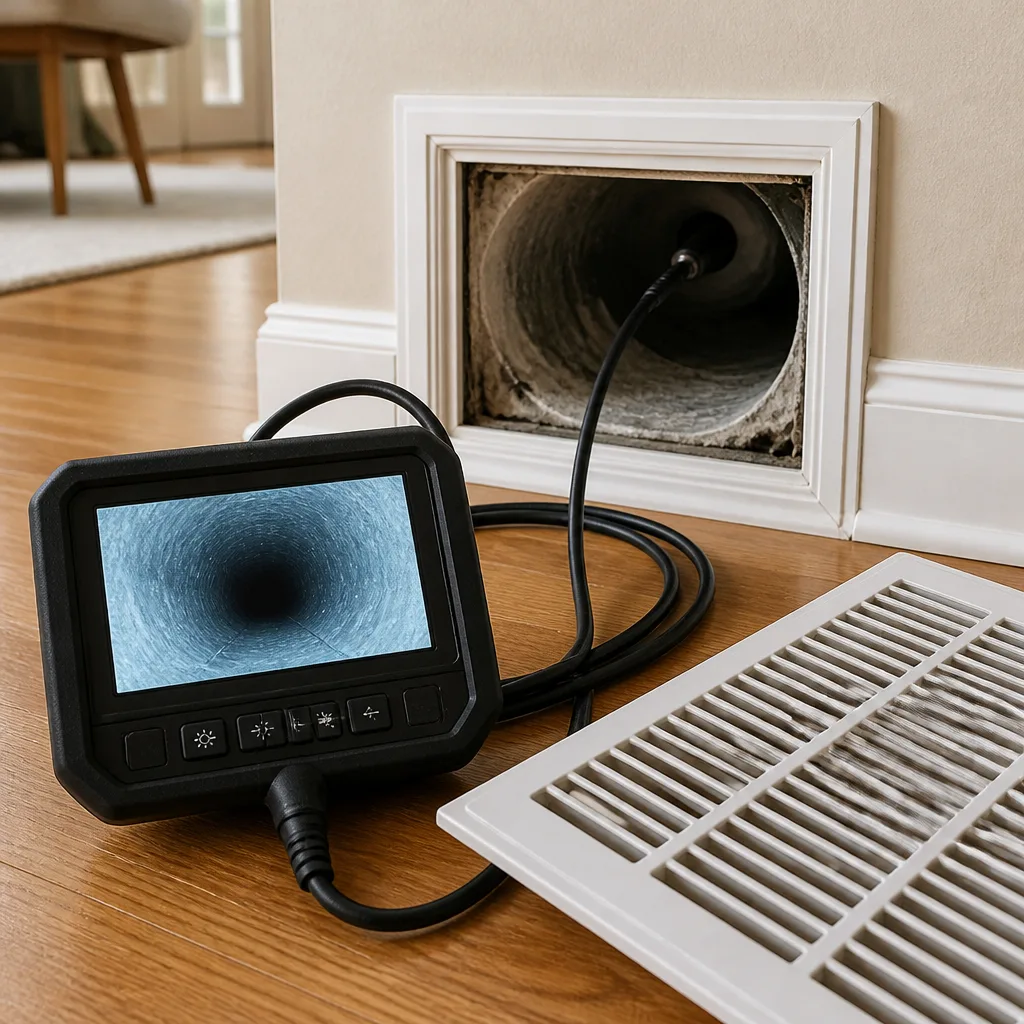 Camera inspection
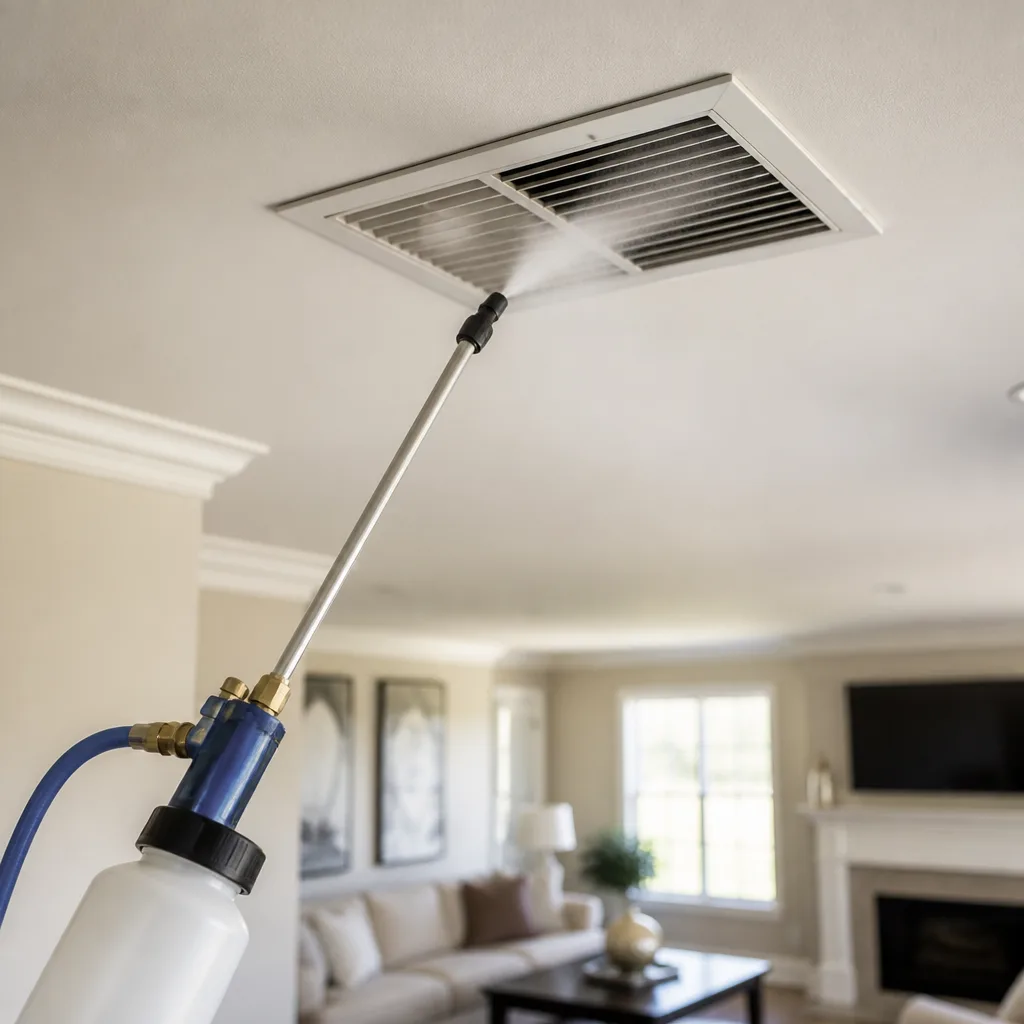 Sanitizing & deodorizing
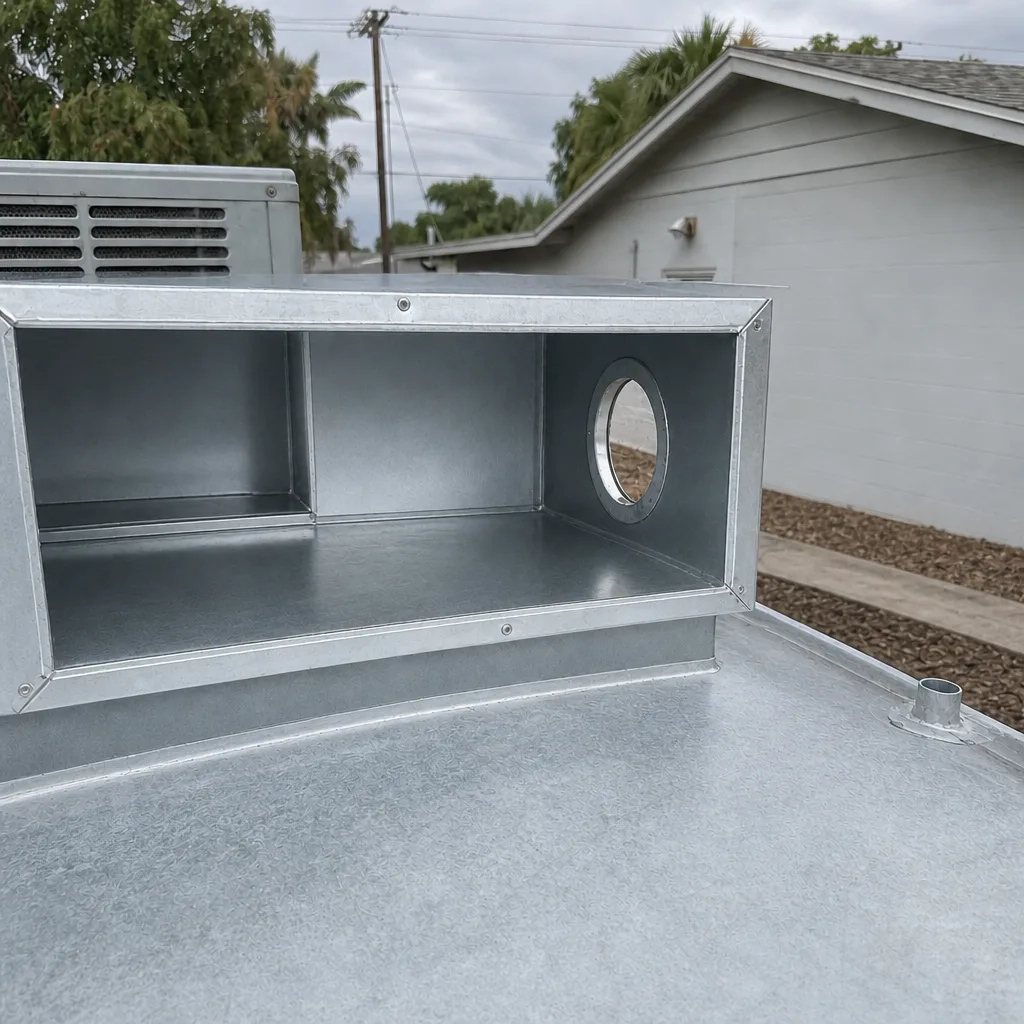
Whole-system duct and dryer vent check with before-and-after photos - you see exactly what came out of your vents
That "$99 whole-house special" is a bait ad - the real number appears once they are in your hallway, or the "clean" is a shop-vac at the register. We photograph the inside of your ducts before and after instead.
Air Duct Cleaning Warning Signs: A Tempe Homeowner’s Reference Guide
Visible dust on your registers is one of the last warning signs your ducts send. By the time you see a gray film on the supply grilles, the system has already been redistributing contaminated air through every room for weeks or months. The warning signs that actually matter are mechanical and measurable: temperature differentials, static pressure changes, and contamination at specific points inside the duct run that no visual register check will ever catch. This guide explains what those indicators are, how to read them in a Tempe home, and when a cleaning is enough versus when the ductwork itself needs repair.
Quick Answer
The warning signs that matter most in Tempe are a supply-to-return temperature split that drifts outside the normal 16-20°F range, rooms that never reach setpoint while the system runs longer, and visible contamination found by borescope at the return plenum, trunk joints, or flex duct interior. Dust on registers is a late-stage symptom, not an early one. If your system is short cycling, uneven, or running longer without a setpoint change, the duct pathway is the first thing to test before replacing equipment.
Styles & brands we work with
- Whole-home duct cleaning
- Dryer vent cleaning
- Camera inspection
- Sanitizing & deodorizing
Table of Contents
- The Measurable Warning Signs Most Guides Skip
- What a Borescope Reveals at Five Points in Your Duct System
- Tempe-Specific Contamination Signatures
- HVAC Symptoms Homeowners Misread as Equipment Failure
- Warning Signs That Cleaning Alone Won’t Fix
- How to Read Your Own Temperature Differential
- Dryer Vent Warning Signs Are a Separate Risk
- What Professional Equipment Actually Does Differently
The Measurable Warning Signs Most Guides Skip
Search for duct cleaning warning signs and you’ll find the same recycled list on every page: dusty furniture, allergy complaints, musty smells, visible grime. Those are real symptoms, but they’re downstream. They appear after the duct system has already been failing for a while. The signs that let you catch a problem earlier are mechanical, and you can measure them without pulling a register off the wall.
Three indicators carry the most weight:
- Temperature differential between supply and return. A properly operating forced-air system in Tempe typically delivers air 16-20°F cooler than the return air during cooling season. If that split narrows to 10-12°F, the system is losing conditioned air somewhere in the pathway, or the coil is struggling against restricted airflow. Either way, the duct side needs to be ruled out before equipment is blamed.
- Airflow imbalance between rooms. If the bedroom closest to the air handler gets cold while the far room stays warm, that difference is a duct problem, not an equipment problem. It usually points to a crushed flex run, a disconnected joint, or a damper that never got balanced.
- Runtime extension without setpoint change. Track how long the system runs to satisfy the thermostat. If that number creeps up over a cooling season with the same setpoint and similar outdoor temperatures, the system is working harder to move the same air. Restricted ducts and a fouled coil both produce this pattern, and the duct side is cheaper to test first.
What makes these signs useful is that they’re objective. You’re not guessing at whether your home “feels dustier.” You’re reading numbers off a thermometer and a clock, and those numbers don’t argue back. In Tempe, where cooling season runs long and the system works hard for months on end, a small drift in differential compounds into a real comfort problem by midsummer.
If your readings are off and you want the underlying pathway evaluated, our air duct cleaning service starts with exactly this kind of diagnostic before any equipment goes into the system.
What a Borescope Reveals at Five Points in Your Duct System
A visual check of your registers tells you almost nothing about the interior of the duct run. The register is the one place the previous homeowner, the last cleaner, and every curious kid has seen. It’s also the least informative. Duct interiors accumulate contamination at specific points where airflow slows, changes direction, or drops below the velocity needed to keep particles moving. A borescope inspection at five of those points shows what’s actually happening inside the system.
- The return plenum. This is where air re-enters the equipment after leaving the occupied space. It’s the first place a borescope should go, and the place a register check never looks. Dust, filter bypass debris, and construction fallout from valley renovation activity tend to collect here first, before spreading through the supply side.
- Trunk line joints and transitions. Every joint is a place where particles can settle and where old tape, mastic, or mechanical connections can fail. A borescope at the trunk joints often reveals debris accumulation on the bottom of horizontal runs and separation at connections that a visual check can’t see.
- Flex duct interior. Flexible duct has a corrugated interior liner that traps dust in its ribs. A borescope reveals both the debris load and the condition of the liner itself, which matters because a compromised liner is a repair issue, not a cleaning issue.
- Boot and register transitions. The short boot connecting the trunk to the register is a dead zone where airflow is slowest. Debris accumulates at the bottom of the boot and gets pushed into the room once the register blasts open on a cooling call.
- The coil face and drain pan area. Technically the air handler, but the coil face and drain pan are where duct contamination meets equipment. A borescope here reveals whether the contamination load has already reached the coil, which changes the cleaning scope.
In our experience, the borescope findings rarely match what the homeowner expected. Homes that “look clean” at the register often show heavy accumulation at the return plenum or a failed joint on the second trunk. Homes that look badly dusted sometimes turn out to have solid ducts and a filtration problem. You only know after you look.
Tempe-Specific Contamination Signatures
Duct contamination in Tempe has a fingerprint, and it looks different from what you’d see in a humid climate or a cold-climate home. Knowing what to look for helps you describe the problem accurately when you call a duct specialist, and it helps you tell the difference between a routine cleaning and a problem that needs real repair.
Caliche Dust Compaction
Caliche is the calcium carbonate hardpan that sits under much of the Salt River Valley. When a home undergoes any digging, grading, or nearby construction, caliche dust becomes airborne. In a return system with a filter bypass issue, that dust gets drawn into the return plenum and compacts onto the interior surfaces over time. Unlike ordinary household dust, caliche deposits are dense and pervasively fine; they don’t brush off easily, and they read on a borescope as a pale, chalky layer that looks almost like paint. Standard shop-vac cleaning won’t lift it. Mechanical agitation with a rotary brush does.
Monsoon Moisture Staining
Tempe’s monsoon season brings short bursts of high humidity and hard rain. When a return is pulling air from an unconditioned space, or when a duct run passes through a hot attic, the temperature swing during a monsoon event can cause condensation inside the duct. That moisture leaves a specific staining signature on the interior surface, and it’s often the first signal of an unsealed joint that’s letting hot attic air and moisture into the supply pathway. Moisture staining is a repair flag, not just a cleaning flag.
Construction Debris from Valley Renovation
Remodeling activity across the Valley leaves drywall dust, insulation scraps, and sawdust in the duct system if the pathways aren’t protected during construction. Tempe has seen substantial renovation and infill work over the last decade, and duct interiors in remodeled homes routinely show construction debris sitting at the return plenum and trunk joints long after the paint dries. It’s not always visible at the register, and it doesn’t always show up as a comfort complaint, but it’s a real contamination load that requires professional extraction.
HVAC Symptoms Homeowners Misread as Equipment Failure
In our experience, a meaningful share of “my AC is failing” calls in Tempe turn out to be duct problems. The equipment is running exactly as designed; it just can’t deliver the air through a restricted pathway. Three symptoms in particular get misread as equipment failure.
Short Cycling
A system that starts and stops rapidly before reaching setpoint is often diagnosed as an oversized unit or a refrigerant issue. Sometimes it’s neither. If the return is undersized or partially disconnected, static pressure rises, the evaporator coil freezes, and the system cycles on a safety limit rather than the thermostat. The behavior looks exactly like equipment failure from the thermostat side. From the duct side, it’s a restriction problem, and it needs a duct inspection before the refrigeration circuit gets touched.
Uneven Room Temperatures
A far bedroom or a west-facing room that never cools the same way as the rest of the house is almost always an airflow balance issue. The system is producing cold air; that air just isn’t reaching the room in the volume intended. Common culprits are a crushed flex run in the attic, a disconnected boot at the register, or a damper that was never set. Cleaning alone won’t fix uneven temps if the duct pathway is compromised; the duct has to be repaired.
Elevated Energy Bills
Here in Tempe, where cooling load dominates the utility bill, a rise in energy cost with the same usage pattern often points to the system running longer to do the same job. Disequilibrium between the equipment and the pathway is one common cause. So is dirt on the coil, which is the duct system’s near-neighbor. If the ducts are the issue, cleaning and repairing them restores the airflow the equipment was designed for, and the runtime normalizes.
Before you call an HVAC replacement contractor, have the duct side tested. A diagnosis at the wrong layer of the system leads to the wrong repair. That’s the whole reason we lead with diagnostics on every duct cleaning Tempe visit rather than arriving with a vacuum and a promise.
Warning Signs That Cleaning Alone Won’t Fix
Some duct problems are contamination problems. Others are structural problems that no amount of cleaning will solve, and it’s important to know the difference before you schedule the work. A cleaning on a structurally compromised duct system just re-fouls within weeks, and nobody wants to pay for the same job twice.
These are the signals that the duct system needs repair as part of the scope:
- Compromised flex duct liner. The interior liner of flex duct can tear, delaminate, or collapse from heat, pests, or improper installation. Once the liner is compromised, it sheds material into the airstream and can’t be cleaned back to service condition. It needs to be repaired or replaced.
- Collapsed return sections. Return ducts pulling through an attic or crawl get crushed, stepped on, or kinked during other trades’ work. A collapsed return drops return airflow dramatically, which raises static pressure across the entire system and drives every other symptom on this list.
- Microbial growth on duct surfaces. Visible microbial growth inside the duct system is a different problem from dust accumulation. It requires containment and filtration during the work, not just mechanical agitation. That’s where professional-grade air filtration equipment matters, and where a shop-vac approach can actually make things worse by spreading spores through the home.
- Disconnected joints and failed tape. Old duct tape fails over time, and joints separate. A disconnected joint is essentially an open path for attic air, insulation fibers, and whatever else lives in the space the duct passes through.
- Failed boots at registers. The boot connection between the duct and the register can separate, which drops supply airflow at the register and lets dust into the wall cavity.
Our air duct repair service exists because so many cleaning requests actually need to be repair jobs. We repair what we find rather than cleaning around the problem and handing the homeowner a report. If we find a compromised liner or a collapsed return, we can fix it in the same visit scope instead of sending you to a second contractor.
When the system requires filtration-level containment during remediation, we deploy Abatement Technologies air filtration units, the same equipment class used in professional mold and remediation work. That’s a different capability tier from a consumer-grade air scrubber, and it’s the reason microbial duct work belongs in professional hands.
How to Read Your Own Temperature Differential
You can measure your own supply-to-return temperature split with a basic probe thermometer and about ten minutes. It’s the single most useful number a Tempe homeowner can track, because it tells you whether the system is delivering the air it’s producing.
- Let the system run for at least fifteen minutes on a cooling call, so the coil and ductwork are at steady state.
- Measure the return air at a return grille, holding the probe in the airstream for a full minute until the reading stabilizes.
- Measure the supply air at a supply register, closest to the air handler, holding the probe for the same duration.
- Subtract the supply reading from the return reading. That’s your differential.
- Repeat at a supply register in the farthest room from the air handler, and note the difference. A large gap between near and far supplies points to a distribution problem, not an equipment problem.
A differential in the normal range with even delivery near and far means the duct pathway is doing its job. A narrow differential across the whole system points to the equipment side. A normal differential near the handler with a sagging differential far away points to the duct pathway. Those three patterns lead to three different calls.
If the number is off and you want the duct side inspected properly, call (866) 261-1801. We answer 24/7. Fast dispatch from 7am to 7pm.
Dryer Vent Warning Signs Are a Separate Risk
Your dryer vent is a fire risk, not a maintenance afterthought. The dryer vent runs a lint pathway that is completely separate from the HVAC duct system, and it fails in a completely different way. Warning signs to watch for:
- Clothes take two cycles to dry when they used to take one.
- The dryer body runs noticeably hotter than it used to during a cycle.
- The exterior vent flap doesn’t open fully, or doesn’t open at all, during a cycle.
- Lint is visible around the dryer connections or accumulating behind the machine faster than usual.
- The laundry room feels humid and warm after a cycle finishes.
Each of these signals reduced airflow through the vent line, which means heat and moisture are staying in the dryer longer than intended. In a hot-climate home where the laundry runs frequently through long summers, a loaded dryer vent is a maintenance item that shouldn’t wait for a failure. We treat dryer vent cleaning as its own discipline, with its own equipment, precisely because it’s a different system from the HVAC ducts and deserves its own protocol.
If you’re scheduling duct cleaning and your dryer has been taking two cycles for a while, ask to have the dryer vent addressed on the same visit. These are the two systems in the home that accumulate combustible lint and dust, and handling them together keeps the home’s airflow pathways in one service scope.
What Professional Equipment Actually Does Differently
The reason duct cleaning goes wrong, when it does, is that the cleaning method matters more than the cleaning schedule. A shop-vac pulls at a register and moves some debris. It doesn’t agitate contamination off the duct interior, and it doesn’t contain what it dislodges. Professional duct cleaning is a two-part method: mechanical agitation to break debris off the surface, and negative-pressure capture to remove it from the system without cross-contaminating the home.
We operate Rotobrush rotary-brush systems for the mechanical side. The rotary brush physically works the duct interior, dislodging compacted dust from the ribs of flex duct and the walls of rigid trunk. That matters in Tempe specifically, because caliche dust compacts onto duct surfaces rather than sitting loose. A brush actually contacts and lifts the contamination; a vacuum alone doesn’t.
For capture, we use Nikro negative-air equipment to maintain the system under negative pressure during cleaning. Negative pressure means dislodged debris is drawn toward the capture point rather than released into the room. Without negative pressure, agitation just moves debris from the ducts into the breathing space.
For filtration during the work, we deploy Abatement Technologies air filtration units. These are the same class of equipment used in remediation work, and they hold up on jobs where the contamination load is heavy enough to require real containment. Standard residential cleaning rarely needs this tier, but when a system presents with compromised ductwork and heavy organic load, the difference between filtration-tier equipment and a consumer air scrubber is the difference between a clean job and a re-contamination.
After cleaning, we align filtration recommendations with Tempe homes running Honeywell or Aprilaire whole-home air quality systems. Clean ducts are the starting point; the right filtration keeps them that way. That’s why the duct cleaning is only half the conversation, and why we plan the filtration piece into the job before we leave.
We also use Guardsman surface-protection products during the service process, because the home you’ve already cleaned shouldn’t need cleaning again when we leave.
Common Mistakes to Avoid
- Judging the ducts by what you see at the register. The register is the one surface that every previous cleaner, homeowner, and curious kid has laid eyes on. The interior of the duct run, and specifically the return plenum and trunk joints, tells a completely different story that a register check will never reveal.
- Replacing the equipment before testing the duct pathway. A narrow temperature differential or wide room-to-room airflow variance is often a duct problem masquerading as equipment failure. Replacing a functioning unit without addressing duct restriction just installs new equipment against the same restricted pathway.
- Using attic dust as a sign the ducts must be cleaned. Tempe attics are dusty, full stop, and a dusty attic doesn’t mean a dirty duct system. The ducts are only contaminated if the contamination has entered them, which is what the borescope is for.
- Booking a cleaning on a system with a compromised liner. Cleaning a duct with a torn or delaminated interior liner just agitates the compromised material into the airstream. The repair has to come first, or at least in the same visit scope.
- Ignoring the dryer vent while scheduling duct cleaning. The dryer vent is a separate pathway with a separate failure mode, and it carries real fire risk when it loads up. Treat it as its own cleaning item, not as a free add-on that gets skipped because the duct truck filled the calendar.
- Accepting a cleaning contract without a scope of what gets inspected. A duct cleaning that doesn’t include a return plenum inspection, trunk joint inspection, and flex liner condition assessment is a cleaning without a diagnosis. You’ll leave with a cleaned system and no idea what condition it was in before we started.
- Assuming the monsoon season “cleans” the ducts. Humidity during monsoon season can stain duct interiors and signal unsealed joints, but it doesn’t flush contamination. Tempe’s high dust load across the rest of the year persists and compounds, monsoon or not.
See the difference
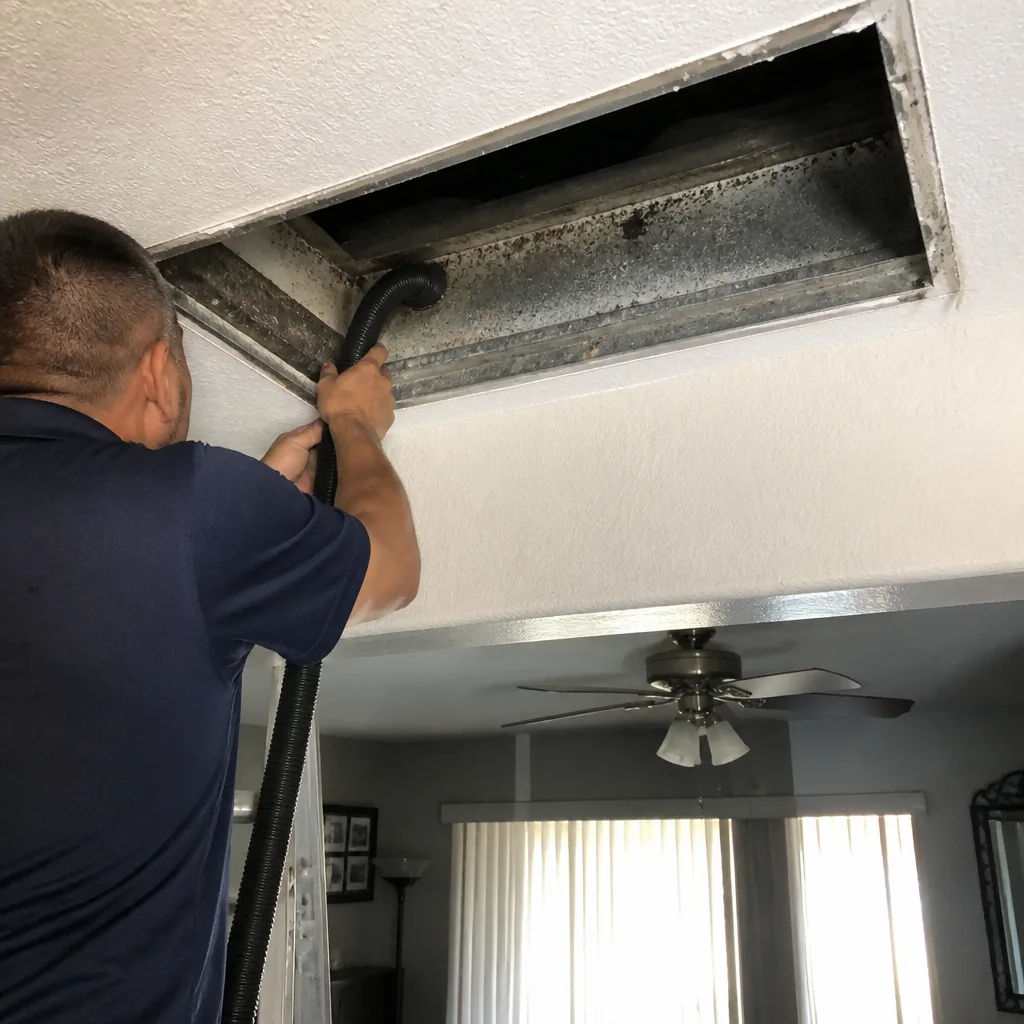 Before
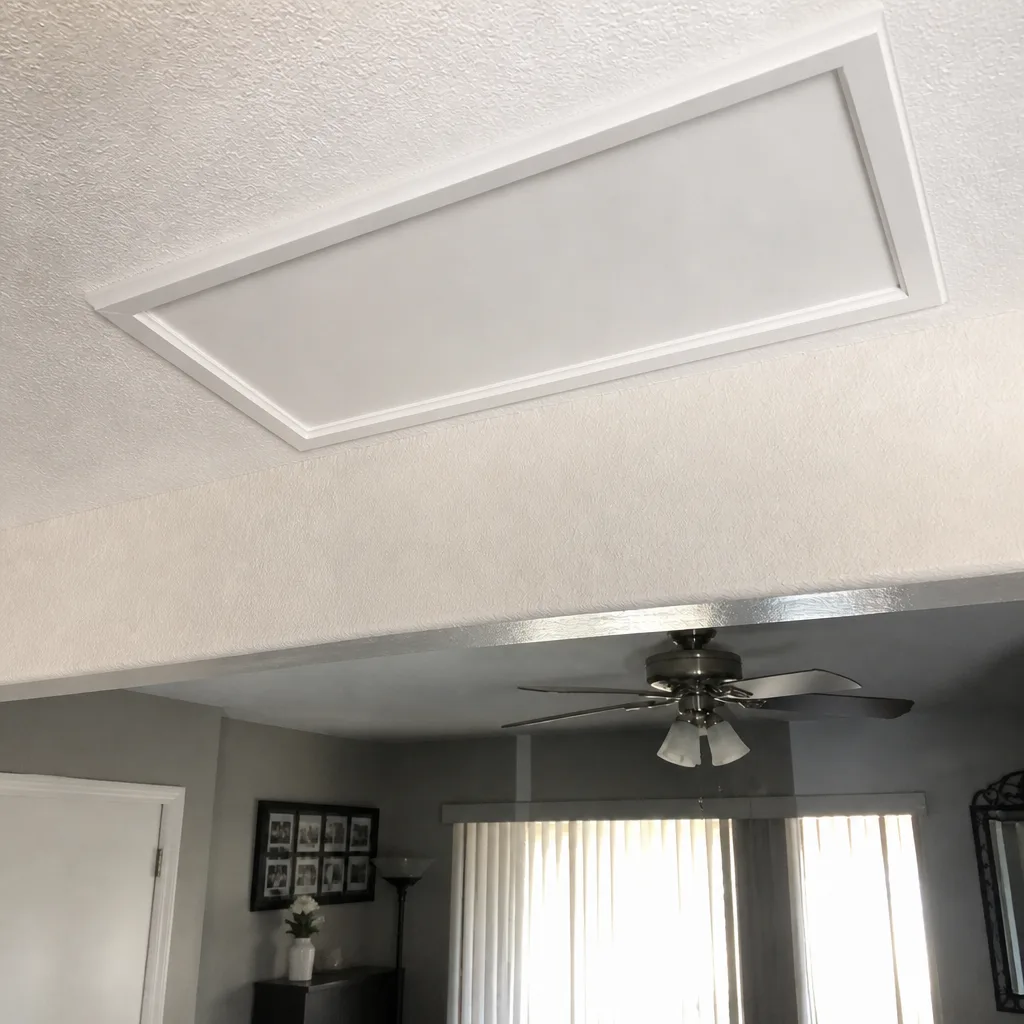 After
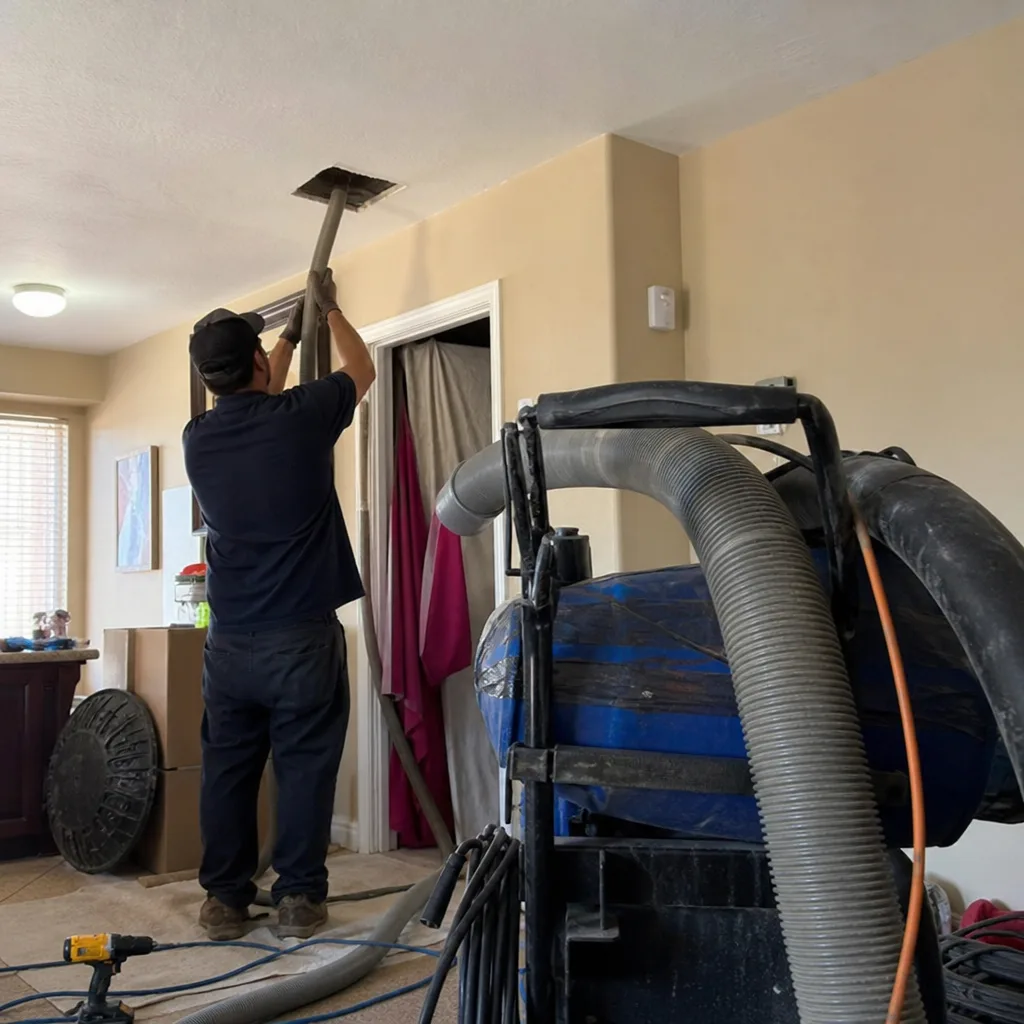 Before
 After
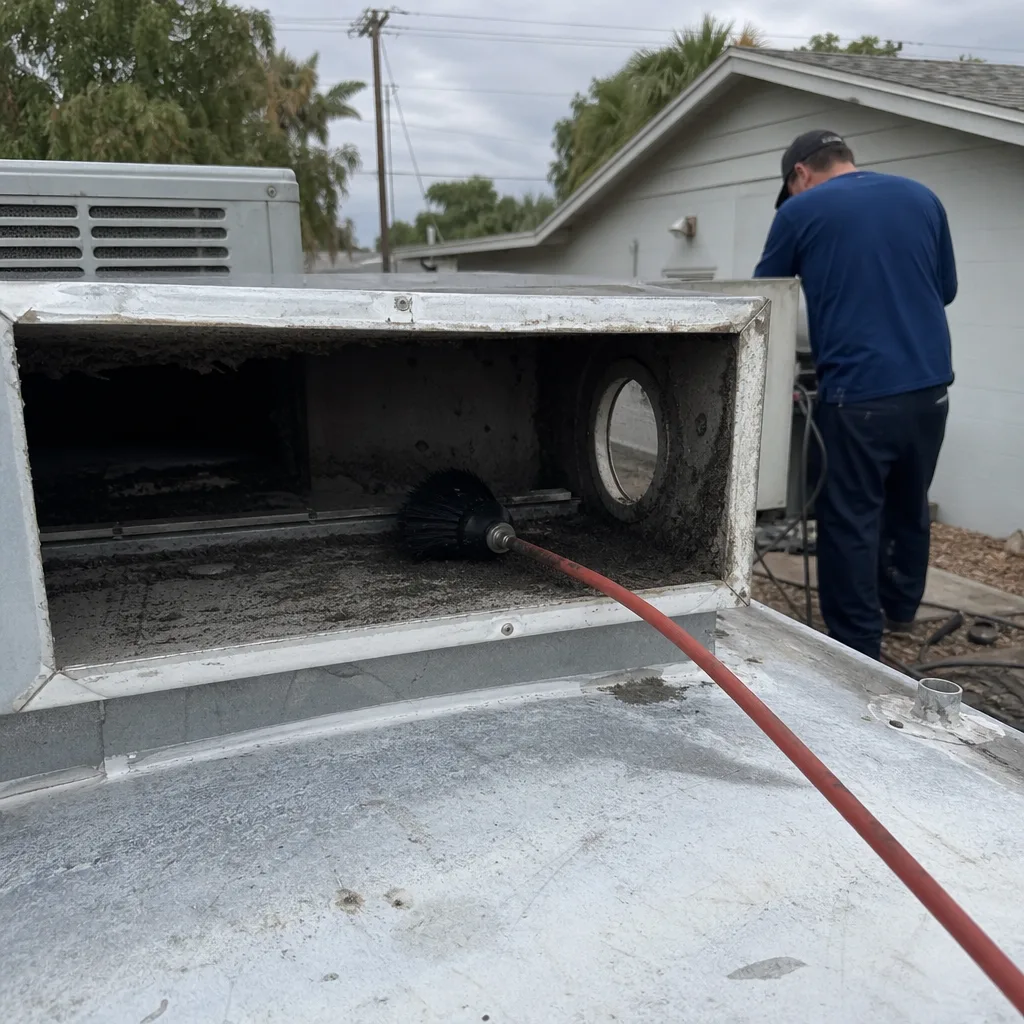 Before
 After
When to Call a Professional
Call a professional when the measurable signs show a real problem, not just when the registers look dusty. Specific triggers: a supply-to-return differential that’s drifted below 14°F, rooms that never reach setpoint while the system runs long, a system that short cycles before satisfying the thermostat, visible moisture staining inside a duct run, a return section that reads as crushed or disconnected, or a dryer vent that hasn’t been cleaned since the machine was installed. Any of those is a professional call rather than a homeowner project. Duct Cleaning Tempe offers free estimates in Tempe – call (866) 261-1801. We answer 24/7. Fast dispatch from 7am to 7pm, Sunday through Friday, and we’re closed on Saturday.
Our technicians have up to 10 years of experience, and we arrive with the diagnostics and the equipment to act on what we find, not just to clean around it.
Frequently Asked Questions
Air duct cleaning in Tempe is priced per system by a written estimate after a diagnostic, not by the register, because the scope of work depends on what the duct system actually needs. Two homes with the same square footage can have very different scopes once the return plenum and trunk joints have been inspected. We give one flat price per system agreed before work starts, and the written estimate sets the final price. Call (866) 261-1801 for an exact quote; estimates are free.
Cheap quotes are usually per-vent prices that skip the return plenum inspection, the trunk joint inspection, and any diagnosis of the duct liner condition, which are the three things that actually determine whether a cleaning is enough. A low per-vent price cleans some of the duct and leaves the rest of the problem behind. We charge one flat price per system after a proper diagnostic so the price reflects the actual scope, and we provide before-and-after photos of your own ducts so you can see what was extracted. Call (866) 261-1801 for an exact quote.
You know the work was done when you have before-and-after photos of your own duct system, not stock photos, and when the diagnostic notes from the inspection are part of the documentation. Photos of the return plenum and trunk joints before and after cleaning show the actual change. We capture that record as standard. Call (866) 261-1801 for an exact quote on your system.
There’s no fixed calendar interval that fits every home in Tempe, because the right answer depends on the system condition, the filtration setup, and what the borescope shows. Homes with recent renovation activity, caliche dust intrusion, or heavy use through long cooling seasons tend to need attention sooner than a home with a well-sealed system and strong filtration. The measurable signs in this guide, not a schedule, tell you when it’s time. Call (866) 261-1801 for an exact quote after an inspection.
Only if the cause is contamination or a fixable airflow restriction, and often cleaning is just the first step. Uneven room temps are frequently a crushed flex run, a disconnected boot, or a collapsed return section, which requires duct repair rather than cleaning alone. Our Air Duct Repair service exists for exactly these cases so a single visit can diagnose and fix the distribution problem. Call (866) 261-1801 to schedule an inspection.
Monsoon humidity can leave moisture staining inside a duct run, and that staining is a signal that hot attic air or moisture is getting into the supply pathway through an unsealed joint. The staining itself isn’t the problem; it’s a clue that a joint or seal needs attention. If you’ve seen moisture staining on duct interiors, the duct run needs to be inspected for joint integrity before it’s cleaned. Call (866) 261-1801 for an exact quote.
The Bottom Line
The warning signs worth tracking in Tempe are mechanical, not cosmetic: a supply-to-return differential that drifts, uneven delivery between rooms, runtime that stretches without a setpoint change, and borescope findings at the return plenum, trunk joints, and flex liner. Dust on the registers is the last signal, not the first. Once you’ve read the measurable signs and identified whether the problem is contamination, structural, or moisture-related, you can pick the right service: cleaning for contamination, repair for structural issues, and professional filtration for the heavy load cases. Duct Cleaning Tempe handles all three in one scope so you don’t have to coordinate multiple contractors. Call (866) 261-1801 to schedule a free estimate.
Written by the team at Duct Cleaning Tempe.