
Last updated November 15, 2026
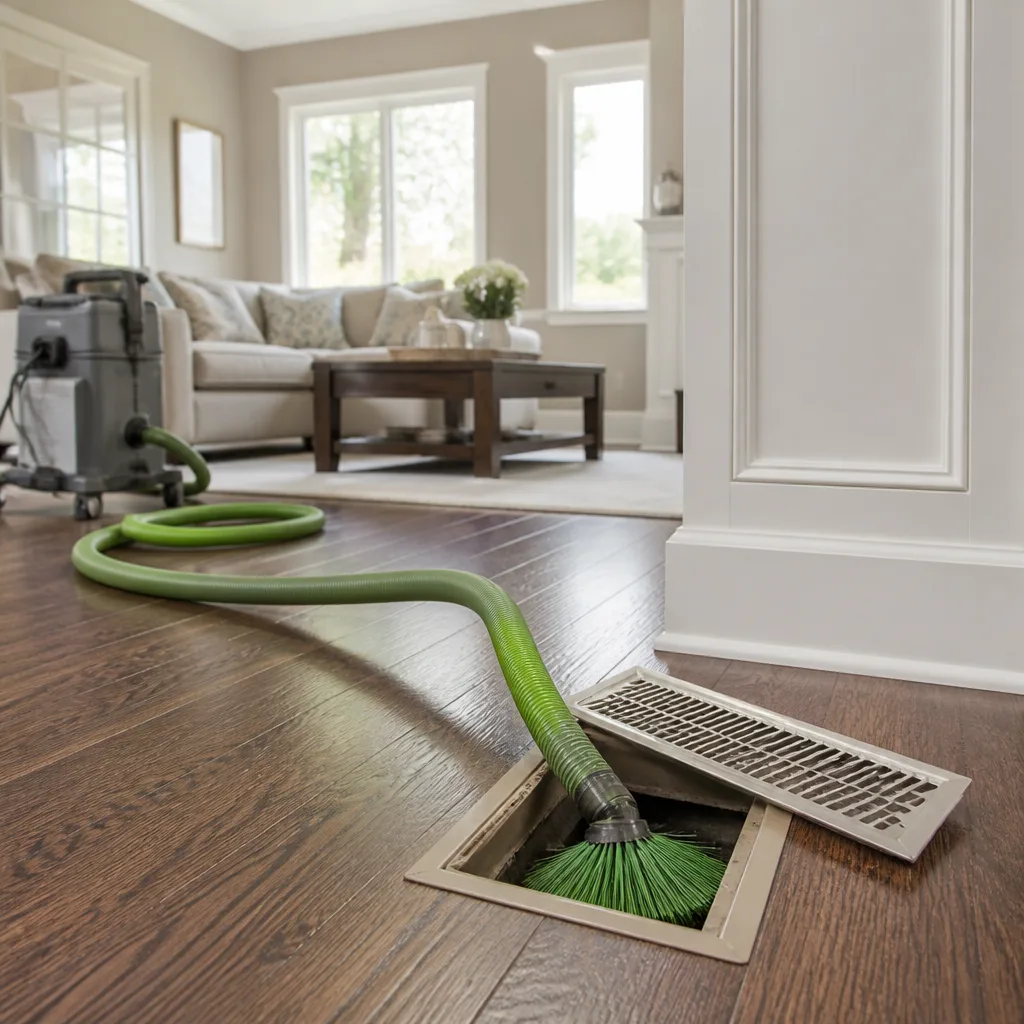 Whole-home duct cleaning
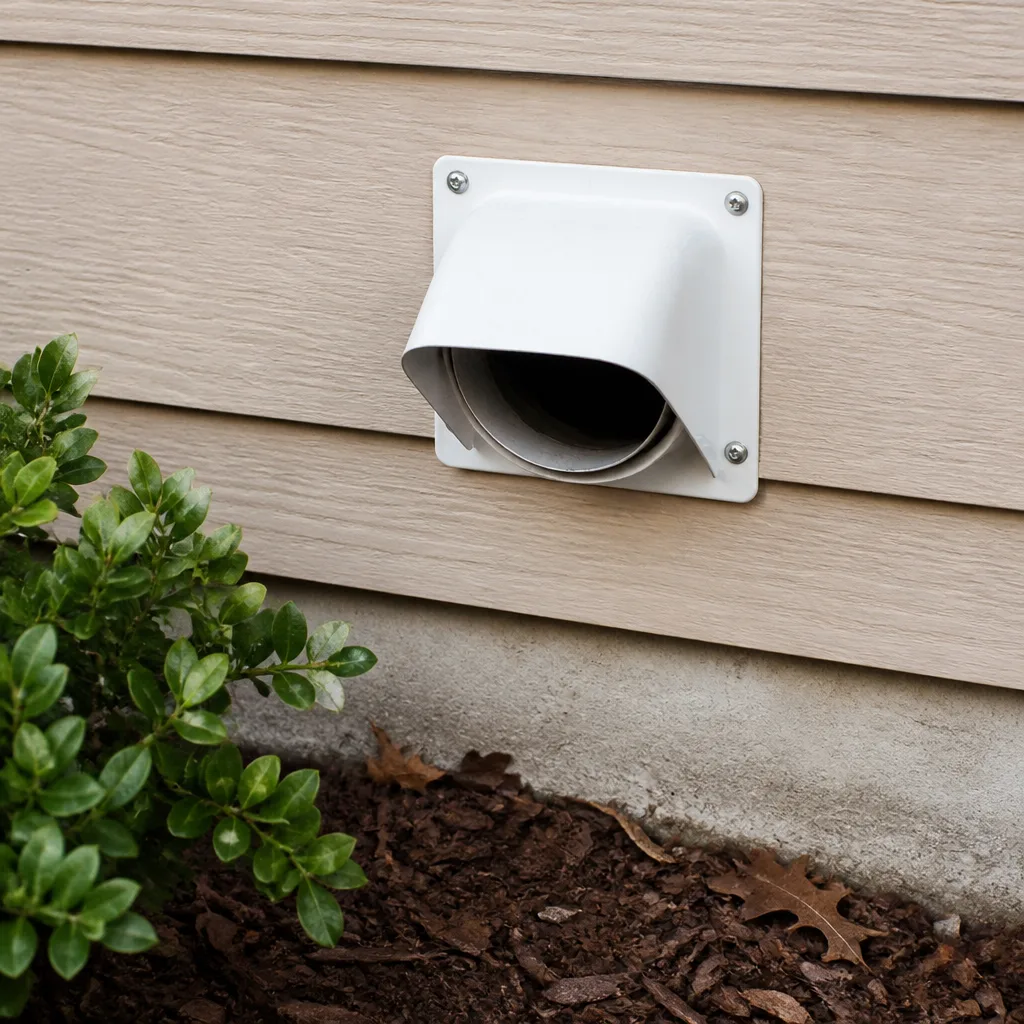 Dryer vent cleaning
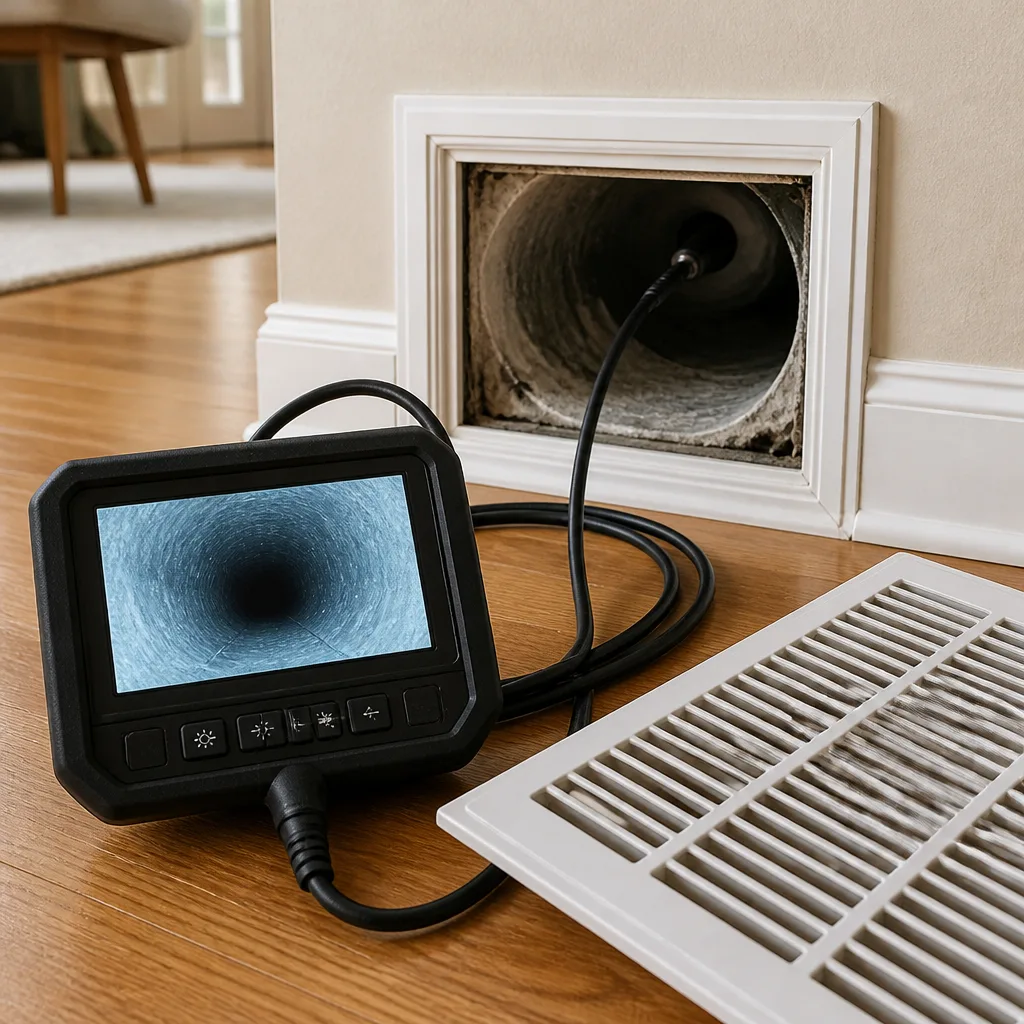 Camera inspection
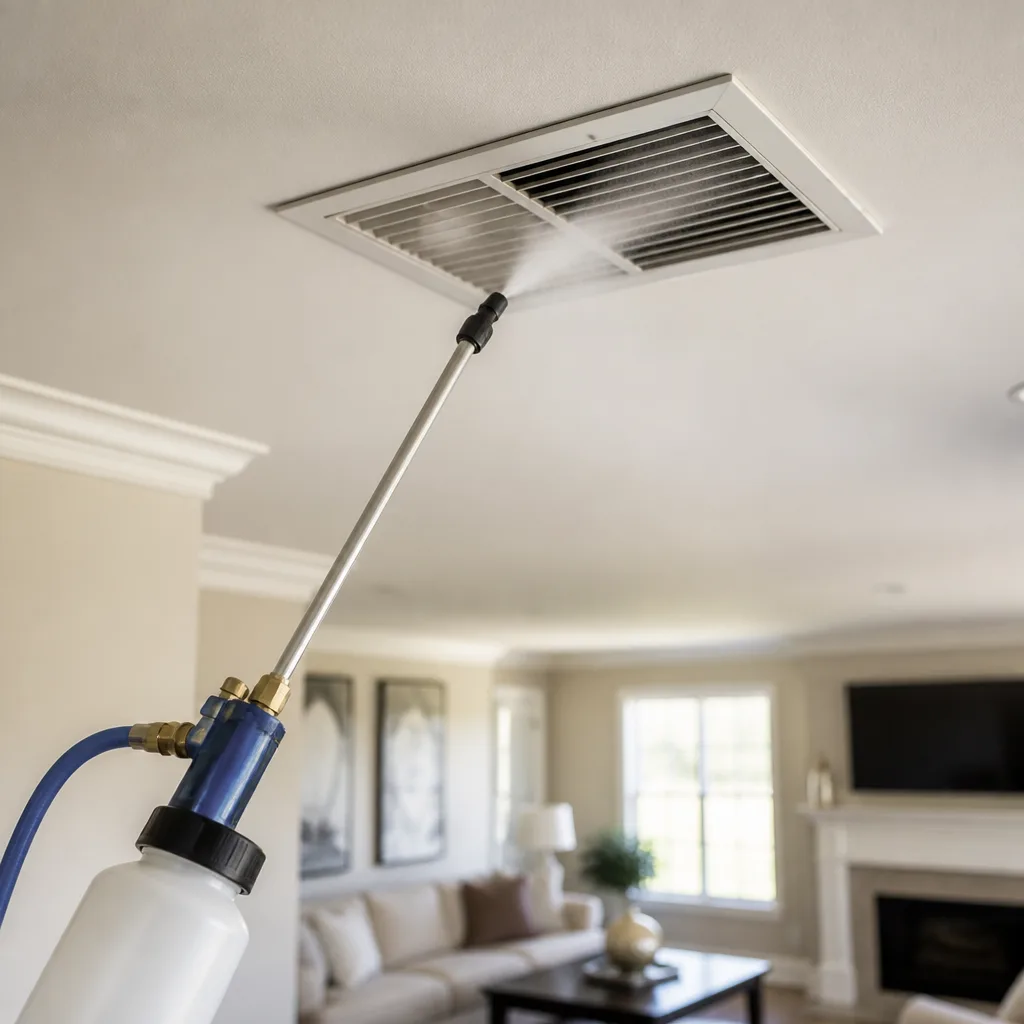 Sanitizing & deodorizing
Whole-system duct and dryer vent check with before-and-after photos - you see exactly what came out of your vents
That "$99 whole-house special" is a bait ad - the real number appears once they are in your hallway, or the "clean" is a shop-vac at the register. We photograph the inside of your ducts before and after instead.
DIY vs Professional Air Duct Cleaning: The Tempe Homeowner’s Decision Guide
Most homeowners who try to clean their own ducts don’t fail because they’re careless. They fail because the physics don’t work. Running a household vacuum into a supply register doesn’t pull debris out of the system – it pressurizes the branch run and drives settled particulate further back, where it packs into seams and compounds with every cycle. That’s the counterintuitive truth about duct cleaning that very few people explain before the shop vac comes out. In this guide, we’ll walk through exactly what professional negative-pressure cleaning does that a homeowner setup can’t, what parts of the job you genuinely can handle yourself, and the specific situations in Tempe where a DIY attempt can turn a cleaning job into a remediation problem.
Quick Answer
DIY air duct cleaning can’t match professional service because consumer tools can’t create the negative pressure containment or mechanical agitation that actually removes debris – a shop vac pressurizes the system instead of capturing particulate at the source. Professional cleaning uses rotary-brush agitation paired with negative-air capture, which pulls dislodged debris out rather than redistributing it. In Tempe, where monsoon infiltration and older builder-grade flex duct are common, a partial job can make contamination worse rather than better.
Styles & brands we work with
- Whole-home duct cleaning
- Dryer vent cleaning
- Camera inspection
- Sanitizing & deodorizing
Table of Contents
- Why Vacuum-and-Hose Cleaning Fails: The Physics of Negative Pressure
- What You Can Legitimately Do Yourself (and How to Do It Right)
- The Three Tempe Scenarios Where DIY Becomes Risky
- The Tool-Cost Reality: Renting Pro Equipment vs Hiring a Pro
- The Liability Threshold: When Disturbing Growth Changes the Job
- What Professional Equipment Actually Does That Yours Can’t
- Why Repair Belongs in the Same Visit as Cleaning
- A Decision Framework for Tempe Homeowners
Why Vacuum-and-Hose Cleaning Fails: The Physics of Negative Pressure
Air duct cleaning works when two things happen at the same time: the debris has to be physically dislodged from the duct wall, and the dislodged material has to be captured before it settles somewhere else. DIY setups typically do neither. A shop vac attached to a supply register pulls air toward the vacuum head, but it doesn’t create negative pressure through the whole duct system – it creates localized suction at one point while the rest of the system stays at ambient pressure or even pressurizes from the blower.
Here’s what actually happens when you agitate dust inside a duct without whole-system negative pressure:
- Settled debris becomes airborne debris. Disturbance without capture sends particles into every branch run downstream.
- The blower redistributes it on every cycle. Even if the HVAC isn’t running during your cleaning, the first time you turn it back on, air moves through the system and pushes loose particulate toward registers.
- Seams trap the new debris. Flex duct and sealed joints collect particulate in the corrugations and seam gaps, where it’s harder to remove next time.
- Your indoor air gets a spike. Particulate that would have stayed on the duct floor until capture occurs instead lands in living space.
Professional equipment solves this with a two-part approach. Rotary-brush systems like those from Rotobrush mechanically agitate the duct walls with a spinning brush head fed through the run, loosening debris that suction alone can’t budge. Meanwhile, Nikro negative-air machines draw a slight vacuum on the whole system through a controlled connection – often at the main trunk or through a filtration unit – so dislodged particulate has exactly one path: out of the ducts and into the capture equipment. Agitation without containment just moves the problem. Containment without agitation leaves the cake of debris stuck where it was. You need both, and a household vacuum provides neither at system scale.
In Tempe, this matters more than it might in a wetter climate because duct systems here often run through unconditioned attic space, where dust loads accumulate in dry, static-charged conditions. Once it’s loose, it wants to be airborne. That’s a big part of why our air duct cleaning work in Tempe emphasizes containment first – every agitation step is paired with active capture on the return side.
What You Can Legitimately Do Yourself (and How to Do It Right)
Plenty of duct maintenance is genuinely within a homeowner’s reach. Register cleaning, filter replacement, and visual inspection don’t require professional equipment – they require attention to detail and a step stool. Doing these tasks right between professional cleanings extends how long the ducts stay clean and can catch small problems before they turn into big ones.
Here’s a legitimately useful DIY routine:
- Pull every supply and return register cover. Most snap out or release with two screws. Take them to the kitchen sink, scrub them with warm water and dish soap, dry them completely, and put them back. Do this quarterly in Tempe – dust films on register faces faster than most people realize because of how much air the system cycles.
- Wipe the first few inches of visible duct throat with a damp microfiber cloth. Stop at the first bend or when you can’t see what you’re touching. Wiping is safe; pushing a rag deep into the run just packs debris against the floor of the duct.
- Replace the HVAC filter on a real schedule. This is the highest-impact thing most homeowners can do. Write the date on the new filter frame with a sharpie so you can actually tell how long it’s been in. In Tempe, dusty spring winds and long cooling seasons can push filter clog faster than the manufacturer’s rating suggests.
- Inspect the visible interior of the return plenum with a flashlight. Look for microbial growth, standing moisture, pest activity, or crumbling duct liner. What you’re looking for is evidence – not a cleaning project.
- Check the outdoor condenser and the accessible duct runs in the attic for disconnected joints. A flashlight and a screwdriver are enough to spot most separations. Leave the repair itself to a pro.
What we’d caution against: extending a shop vac hose down a duct run and calling it cleaning. What we actively recommend: do the low-risk items above on a schedule, and let professional equipment handle the mechanical agitation and negative-air capture. The tasks split cleanly.
The Three Tempe Scenarios Where DIY Becomes Risky
Most DIY duct cleaning fails quietly – some dust gets stirred up, some stays put, and the home doesn’t fall apart. But three specific situations in Tempe turn a mild failure into a real problem, and they’re common enough that they’re worth calling out before anyone picks up a shop vac.
1. Post-Renovation Debris Loads
After a kitchen or bathroom remodel, ducts typically carry drywall dust, sawdust, insulation fibers, and construction particulate. That load is heavier and more abrasive than household dust, and it settles into branch runs and flex duct corrugations. Agitating it without containment doesn’t just redistribute it – it can carry fine particulate all the way to the air handler, where it coats the evaporator coil and blower wheel. That turns a duct cleaning into an HVAC coil cleaning, which is a separate service. Professional cleaning after renovation uses negative-air capture to make sure the construction load is removed from the system, not relocated into it.
2. Suspected Growth After Monsoon Infiltration
Tempe’s monsoon season drives wind-blown dust and, in some homes, moisture into attic runs and duct joints that aren’t perfectly sealed. If you can see or smell evidence of microbial growth in a duct, the job is no longer simply cleaning. Disturbing that growth with a shop vac fragmentizes it and launches spores through the system, where they settle in the living space. That’s a remediation scenario, and it’s where tools like Abatement Technologies air filtration enter – the same equipment class used in mold and remediation projects, designed to contain disturbed biological material rather than redistribute it. If you suspect growth, don’t agitate. Call and describe what you’re seeing.
3. Homes With Original Builder-Grade Flex Duct Over 10 Years Old
Many Tempe homes built in the 2000s and 2010s still have the original flex duct in the attic. Flex duct has a plastic inner liner and a wire helix; after a decade in attic heat, that liner gets brittle, seam tape fails, and joints separate. Pushing a brush, a shop vac hose, or a rag through old flex duct can tear the liner, and a torn liner becomes a debris trap that gets worse with every cycle. A technician inspects the duct before agitating it and can repair compromised joints and runs as part of the visit – which is exactly why Duct Cleaning Tempe offers air duct repair alongside cleaning rather than handing you a report and leaving.
The Tool-Cost Reality: Renting Pro Equipment vs Hiring a Pro
One of the most common arguments for DIY is cost. It’s worth examining honestly. Renting professional-grade duct cleaning equipment – a rotary brush system, negative-air machine, and HEPA filtration – approaches professional service pricing on its own, and you still don’t get the diagnostic eye that separates a real cleaning from a pass-through.
Here’s how the comparison usually breaks down:
- Rotary brush rental. Not every rental yard stocks a rotary brush system, and where available, day rates plus the consumable brush heads add up quickly. You also need to know which brush head is right for your duct material, which is not the kind of thing you learn in the rental bay.
- Negative-air machine rental. Similar availability problem, similar day-rate cost. You also need to understand how to hook it to your system without depressurizing the home dangerously.
- HEPA filtration rental. Rarely available at consumer rental rates, and the filter media is usually billed separately.
- Personal time. A whole-home professional cleaning is a scheduled half-day job for a trained technician. Add setup, break-down, and learning-curve time, and the DIY hours run well past a weekend.
- Diagnostic gap. No rental package tells you that the return plenum has a separated seam, that the flex duct in the attic is lined with compromised material, or that the system is running at low static pressure because of a crushed run. A trained technician sees those things during the visit – and can address them the same day. That’s the difference between clean ducts and a clean, functioning airflow pathway.
In short: the tool math doesn’t actually favor DIY for whole-home cleaning. It favors DIY for the register-and-filter tasks above, where the tools are already in your kitchen.
The Liability Threshold: When Disturbing Growth Changes the Job
There is a line in duct cleaning between cleaning and remediation, and it’s usually defined by whether microbial growth is present. Cleaning removes accumulated dust, debris, and particulate from a duct system that is otherwise sound. Remediation contains, removes, and verifies removal of biological contamination in a duct system that has been compromised – often by moisture, monsoon infiltration, or a water event elsewhere in the home.
Disturbing suspected growth with household equipment crosses that line in the wrong direction. A shop vac fragmentizes spores and pushes them into living space. A brush launched into a moist duct spreads the growth across a wider surface. What professionals do instead:
- Contain first. Negative-air machines and HEPA filtration units establish directional airflow that pulls disturbed particulate into capture rather than into the room.
- Agitate mechanically. Rotary brush heads dislodge material from the duct wall while containment is active.
- Capture at the source. Air filtration in the remediation equipment class – like the Abatement Technologies units we use – captures fine particulate and biological material at the collection point.
- Repair the compromised duct. Any joint, seam, or run that introduced the moisture or debris gets sealed or repaired, not just cleaned.
- Recommend filtration upgrades. Once the system is clean and repaired, Honeywell and Aprilaire whole-home filtration options reduce how quickly ducts load back up. Clean ducts are the starting point – the right filtration keeps them that way.
In Tempe, this sequence matters more than in many markets because the combination of dry airborne dust and seasonal monsoon moisture creates the exact conditions where growth can establish in the first place. If you suspect growth in the ducts, don’t agitate. The whole job changes shape.
What Professional Equipment Actually Does That Yours Can’t
It helps to understand what each piece of professional equipment is actually doing, because the terms get thrown around loosely. There are three functional jobs in a proper duct cleaning, and each one has dedicated equipment behind it.
The Agitation Job
Rotary brush systems – like the contractor-grade Rotobrush equipment our technicians operate – feed a spinning brush head through the duct run, scrubbing the interior wall and loosening debris that has settled, compacted, or adhered. Household brushes and vacuums can’t reach through a run, and they don’t spin at a speed that dislodges packed debris without damaging the duct. The brush type has to match the duct material, which is one of the professional judgments a homeowner can’t make from a rental counter.
The Containment Job
Nikro negative-air machines draw controlled vacuum on the whole system while the brush is agitating. That means loosened particulate has one place to go: out of the duct and into capture. This is the piece that DIY setups almost never replicate, and it’s the reason agitation without containment makes things worse instead of better. We think of it as the difference between sweeping a floor and sweeping it into a bag.
The Repair and Prevention Job
Once the ducts are clean, the question becomes whether the system is sound. Our technicians have up to 10 years of experience with finding the compromised seams, disconnected joints, and failed tape that fester inside attic duct systems – and Air Duct Repair is a named service precisely because we don’t want the cleaning to end at a recommendation. When the visit includes a compromised dryer vent, we handle dryer vent cleaning as part of the same scope, since a clogged dryer vent is a fire risk, not a maintenance afterthought. Guardsman surface protection goes down before any work starts so we don’t leave a mess on your floors or furniture while we’re working overhead.
Having cleaning, dryer vent clearing, and repair under one visit scope also reduces how many contractors a Tempe homeowner has to coordinate. Three services, one scheduled visit, one written estimate.
Why Repair Belongs in the Same Visit as Cleaning
A cleaning that doesn’t include repair is a cleaning that won’t last. If the ducts have a disconnected joint in the attic, the seam is going to reintroduce attic air, insulation fibers, and dust into the system within weeks of the cleaning. If the flex duct has a torn liner, the tear will act as a debris trap regardless of how well the duct was cleaned. Repairing what we find isn’t a bonus service – it’s the difference between a cleaning that lasts and one that quietly undoes itself.
This is a place where DIY fails predictably. A homeowner can clean effectively and still end up with a system that needs repair, because cleaning doesn’t reveal the repair need – inspection does. Restoration of the airflow pathway means diagnosing the full system, not just the segment you can see from a register. In Tempe homes with attic duct runs, that diagnosis covers the attic portion, the trunk, the branch runs, the return, and the connection at the air handler. Any one of those can be the weak point, and cleaning without finding the weak point is only half the job.
What this looks like practically:
- Inspection before agitation. Duct material, joint integrity, and evidence of moisture or growth get checked before any brush goes in.
- Cleaning with containment active. Negative air runs throughout, not just during the final pass.
- Repair as we find it. Failed tape, disconnected joints, and torn liner are addressed in the same visit, not flagged for another trip.
- Filtration recommendations after. Honeywell and Aprilaire options for reducing future load – matched to your system, not upsold indiscriminately.
A Decision Framework for Tempe Homeowners
Not every home needs professional duct cleaning on a set schedule. Here’s a way to think about the decision that doesn’t rely on guesswork.
- How long has it been since the last professional cleaning? If you can’t remember, or if it’s been more than a few years, start with a professional visit rather than a DIY attempt.
- Has there been a renovation recently? If yes, professional cleaning is almost always the right call – construction debris needs containment-level capture.
- Is there any smell, visible evidence, or moisture history in the ducts? If yes, stop and call. Suspected growth turns the job into remediation territory.
- Is the home running original builder-grade flex duct over 10 years old? If yes, have it inspected before agitating anything. Repair may be part of the visit.
- Is the dryer taking too long? That’s a dryer vent symptom, and it belongs in a professional visit rather than a homeowner pass with a brush.
- None of the above? DIY the register cleaning and filter replacement, and schedule a professional cleaning to establish a baseline you can maintain.
If you’re unsure which category your home falls into, a free estimate call usually settles it in a few minutes. We serve Tempe and the surrounding East Valley, and we won’t recommend a visit you don’t need.
Common Mistakes to Avoid
- Running a shop vac into a supply register. It pressurizes the branch run and drives settled debris deeper into the duct – the exact opposite of cleaning.
- Agitating ducts without negative pressure. Stirring dust without containment launches particulate into every downstream branch and into the living space on the next blower cycle.
- Pushing a brush into old flex duct without inspection. In Tempe’s attic heat, flex duct liners get brittle; a brush can tear the liner and turn the run into a permanent debris trap.
- Disturbing suspected growth with household equipment. Fragmentizing spores launches them through the system. Suspected growth is a stop-and-call situation.
- Skipping filter replacement after a cleaning. A clogged filter immediately reloads the ducts you just paid to clean.
- Ignoring the dryer vent. A clogged dryer vent is a fire risk, not a maintenance afterthought – it needs the same attention as the supply ducts.
- Cleaning without repairing what’s found. Disconnected joints and failed tape will reintroduce attic dust and insulation fibers within weeks, undoing the cleaning.
See the difference
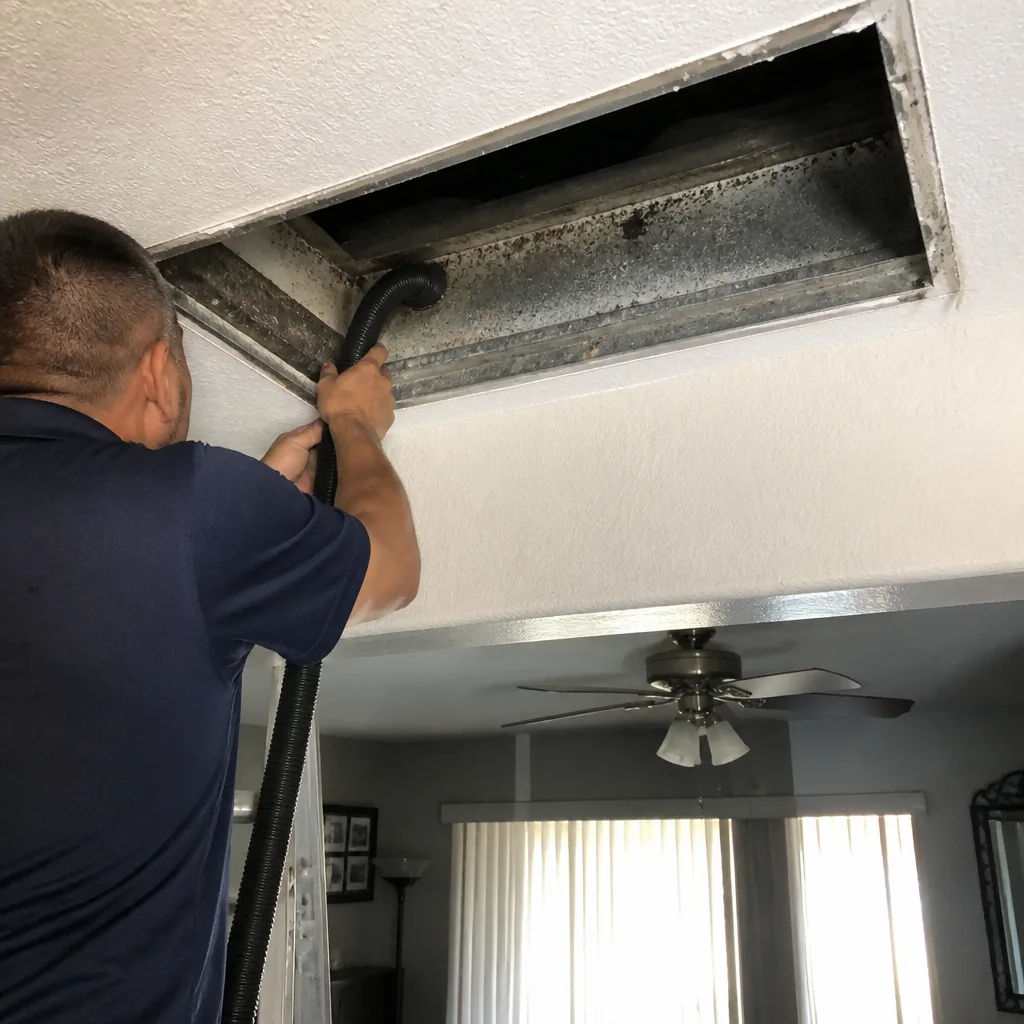 Before
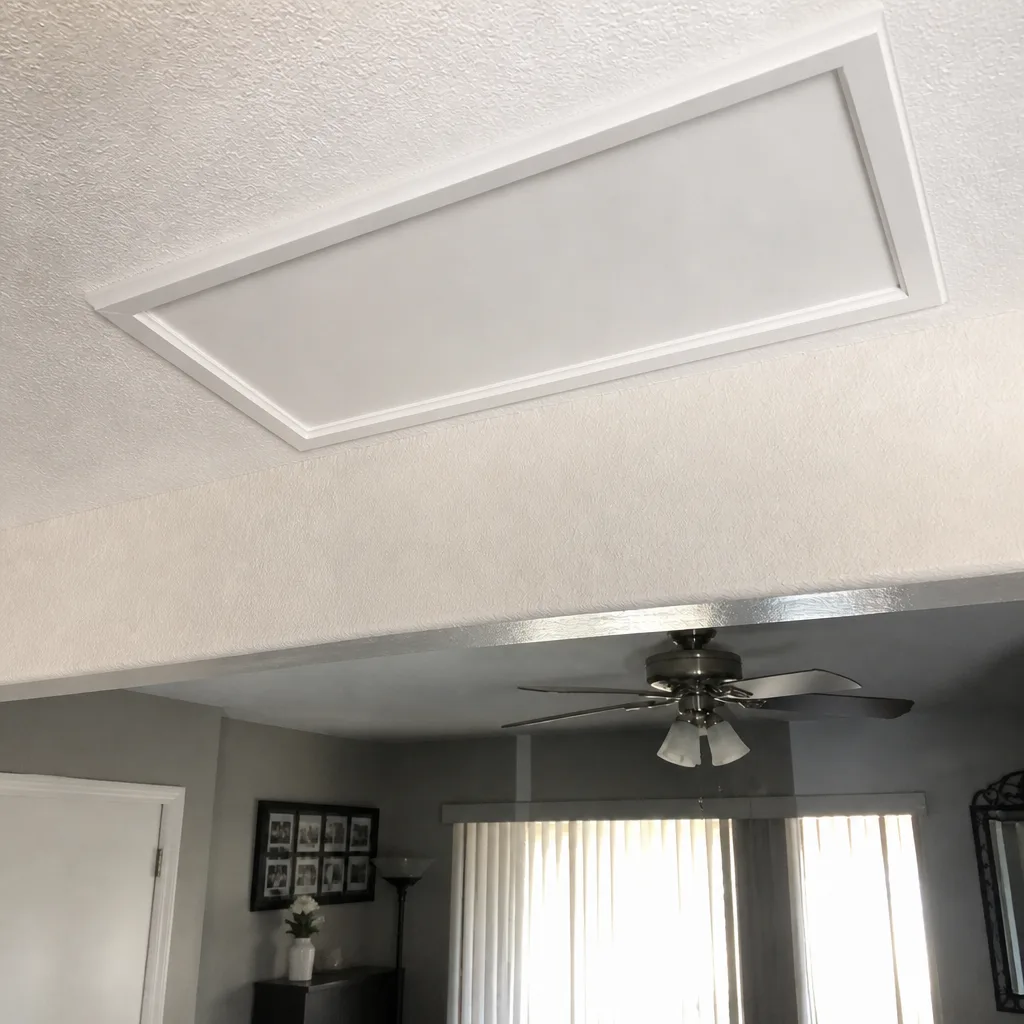 After
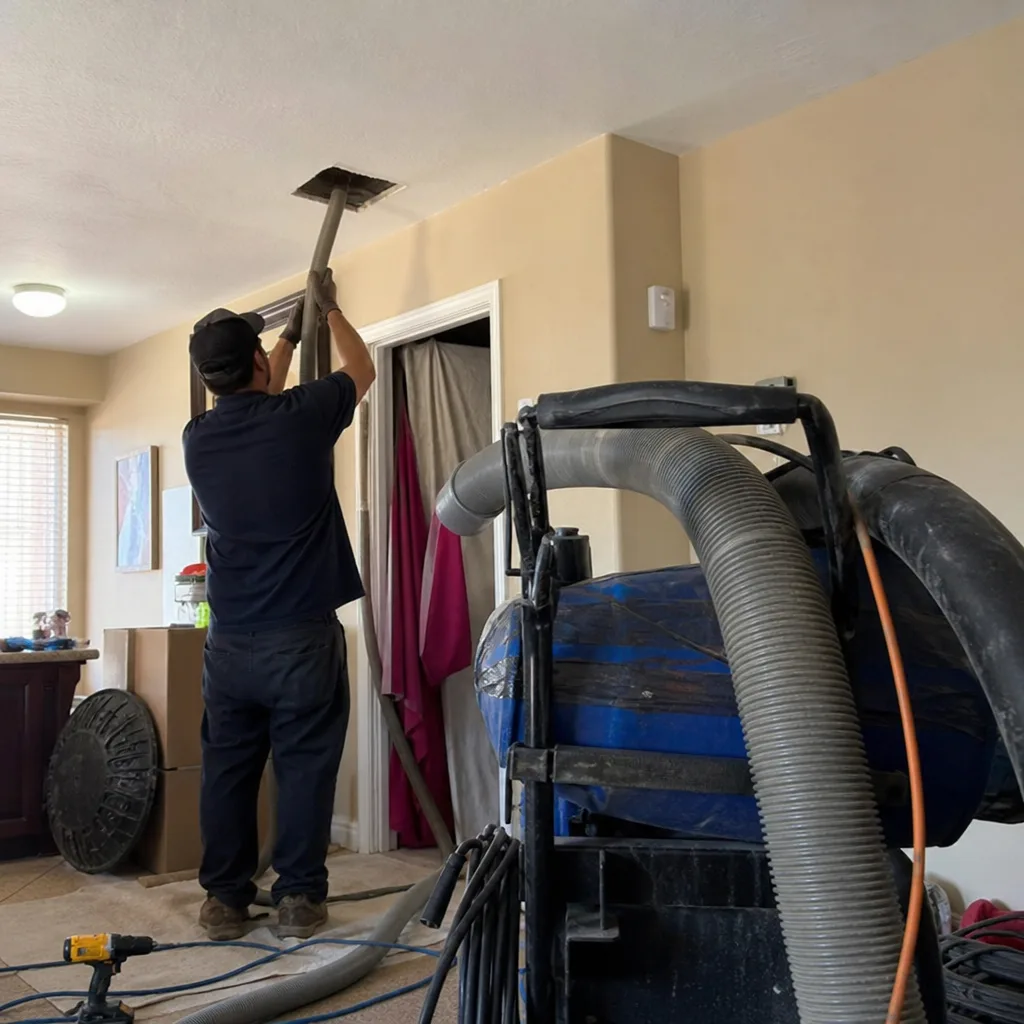 Before
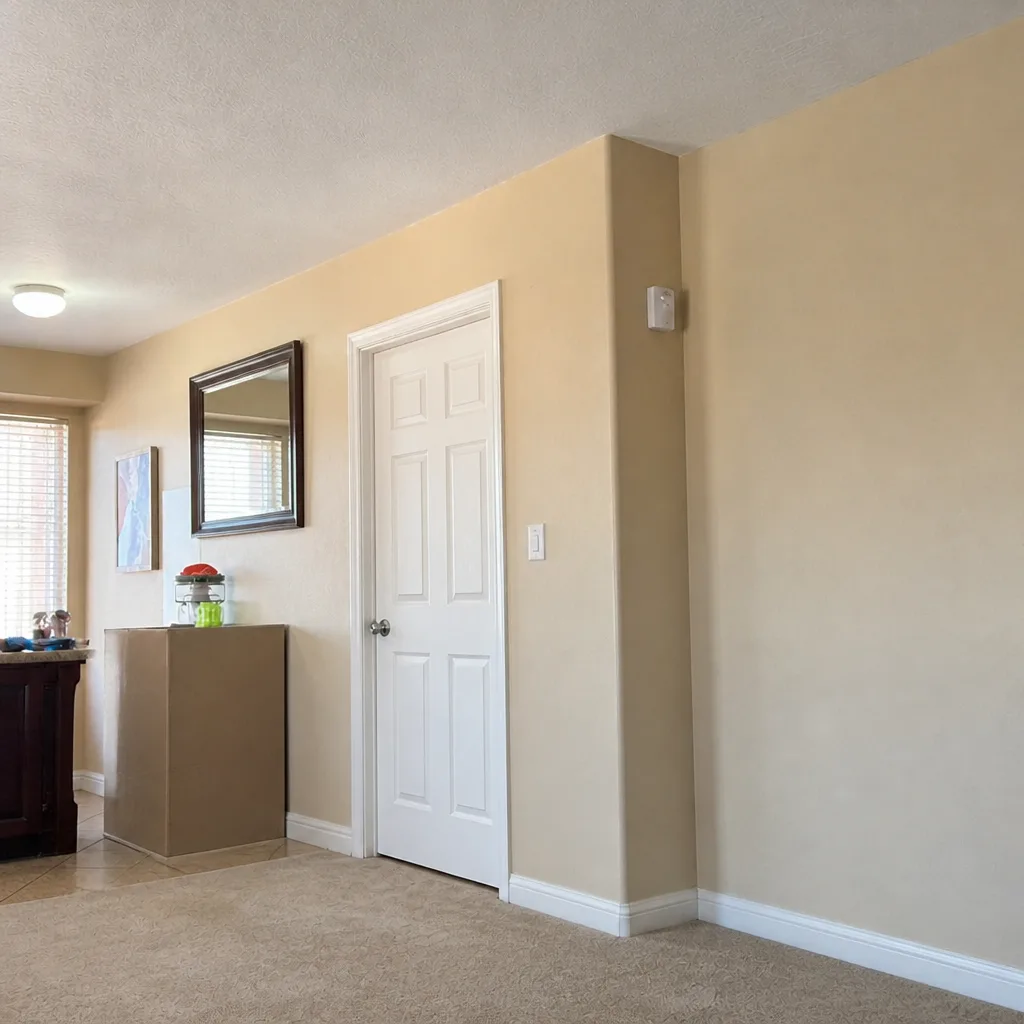 After
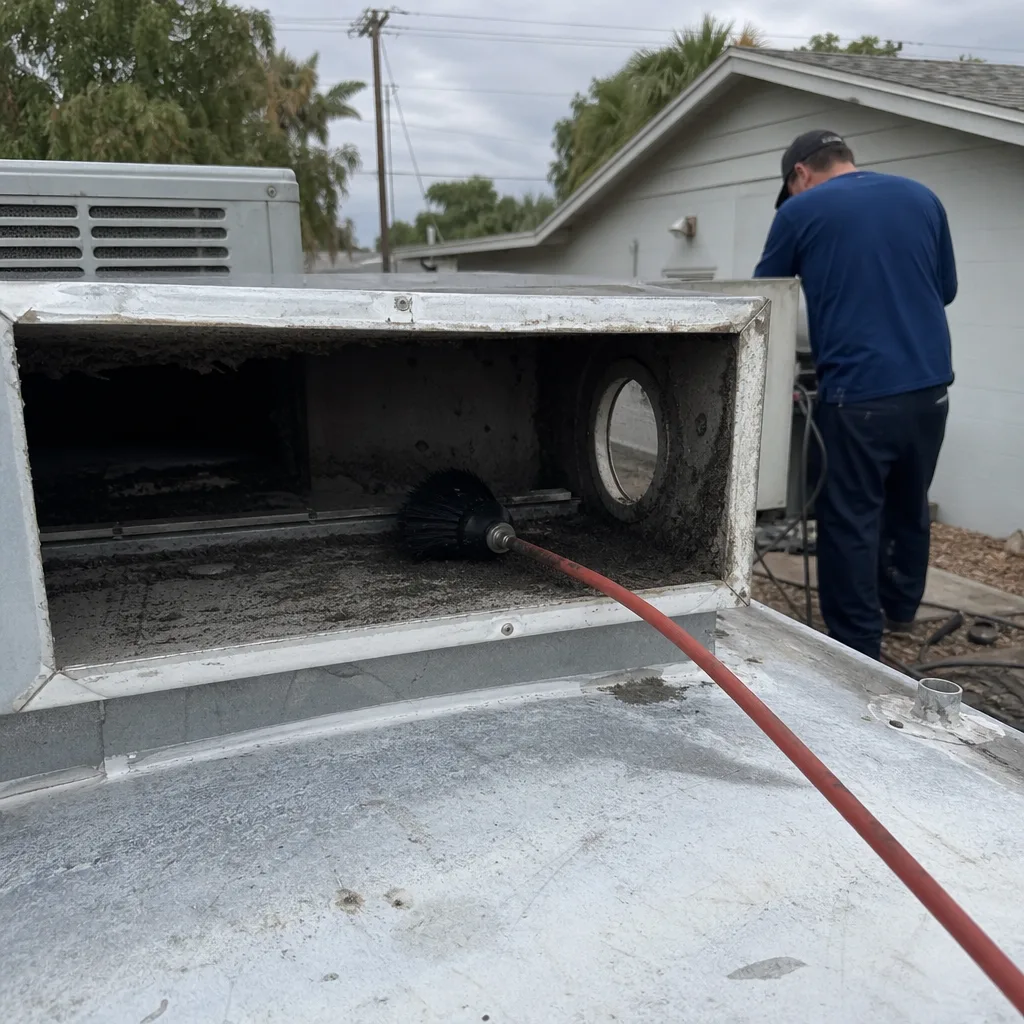 Before
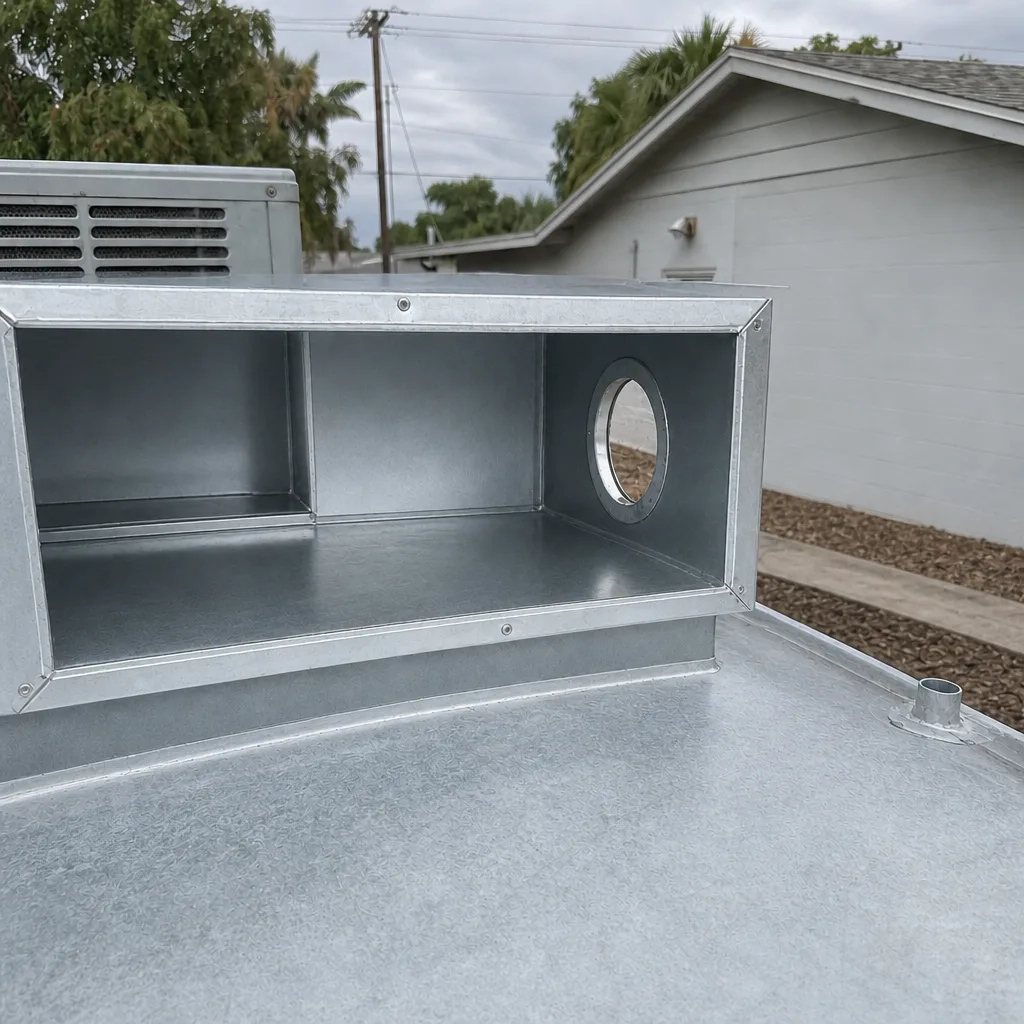 After
When to Call a Professional
Call a professional when duct cleaning stops being routine. Post-renovation debris loads, any suspected microbial growth after monsoon infiltration, homes with original flex duct over 10 years old that haven’t been inspected, visible debris around registers, persistent musty smells, uneven airflow between rooms, and a dryer that takes more than one cycle all qualify. So does a home that simply hasn’t had a professional cleaning in a long stretch and needs a baseline. DIY is fine for register cleaning, filter replacement, and a flashlight inspection – the moment the job calls for mechanical agitation and negative-pressure containment, it’s a professional visit. Duct Cleaning Tempe offers free estimates in Tempe – call (866) 261-1801. We answer 24/7. Fast dispatch from 7am to 7pm, Sunday through Friday. One flat price per system is agreed before work starts, and you get before-and-after photos of your own ducts.
Frequently Asked Questions
Typical pricing runs per system, not per vent, and the written estimate sets the final number for your home. Whole-home duct cleaning generally falls in a range that depends on the number of systems, the duct material, and whether repair work is needed. Be cautious of any quote that starts with a teaser number and grows once the technician is on site – one flat price per system, agreed before work starts, is the honest model. Call (866) 261-1801 for an exact quote – estimates are free.
You can clean the register covers and replace the filter yourself, but a shop vac cannot effectively clean a whole duct system. It creates localized suction at one point without whole-system negative pressure, and agitating dust with a shop vac typically pushes particulate deeper into the branch runs rather than removing it. Effective cleaning needs rotary-brush agitation paired with negative-air capture.
For most Tempe homes, professional cleaning every few years is reasonable, but the answer depends on dust load, renovation history, filter maintenance, and whether the ducts are in an attic run. Homes with pets, recent construction, or high outdoor dust exposure may need attention more frequently. Filter replacement is the highest-frequency task and should run on the manufacturer’s schedule – not the duct cleaning schedule.
Cheap quotes usually reflect either a per-vent pricing model that expands on-site, or a scope that lacks proper containment and repair capability. A quote that doesn’t mention negative-pressure equipment, rotary agitation, or what happens when a duct is found to be compromised is quoting a different job than a full-system cleaning with containment. If the price seems very low, ask exactly what equipment will be used and whether repair is in scope.
Ask for before-and-after photos of your own ducts. A real cleaning leaves visible evidence in the register throats, plenum, and accessible runs – and a written scope that names the equipment used. Reputable operators document the visit; vague verbal summaries don’t prove anything. Our before-and-after photos are part of the visit record.
Suspected mold in a duct changes the job from cleaning to remediation, and it should not be agitated with household equipment. Remediation-level work uses HEPA filtration and negative-air equipment in the same class as mold remediation projects, and it includes repairing any joint or seam that introduced moisture. If you suspect growth, call (866) 261-1801 and describe what you’re seeing before you touch anything.
The Bottom Line
DIY duct cleaning is not dangerous in most cases – it’s ineffective. Consumer tools can’t create the negative-pressure containment or mechanical agitation that removes settled debris, and in Tempe’s conditions an incomplete job can relocate contamination rather than remove it. Register cleaning, filter replacement, and visual inspection are legitimate DIY tasks. Post-renovation debris, suspected moisture or growth, and homes with original builder-grade flex duct over 10 years old all call for professional equipment. Repairing what’s found in the same visit is what makes the cleaning last. If you’re in Tempe and unsure which side of the line your home is on, one free estimate call settles it.
If you’re ready to move forward, call Duct Cleaning Tempe at (866) 261-1801 for a free estimate on air duct cleaning in Tempe. We answer 24/7. Fast dispatch from 7am to 7pm, Sunday through Friday. One flat price per system, agreed before work starts, with before-and-after photos of your own ducts.
Written by the team at Duct Cleaning Tempe.