
Last updated November 15, 2026
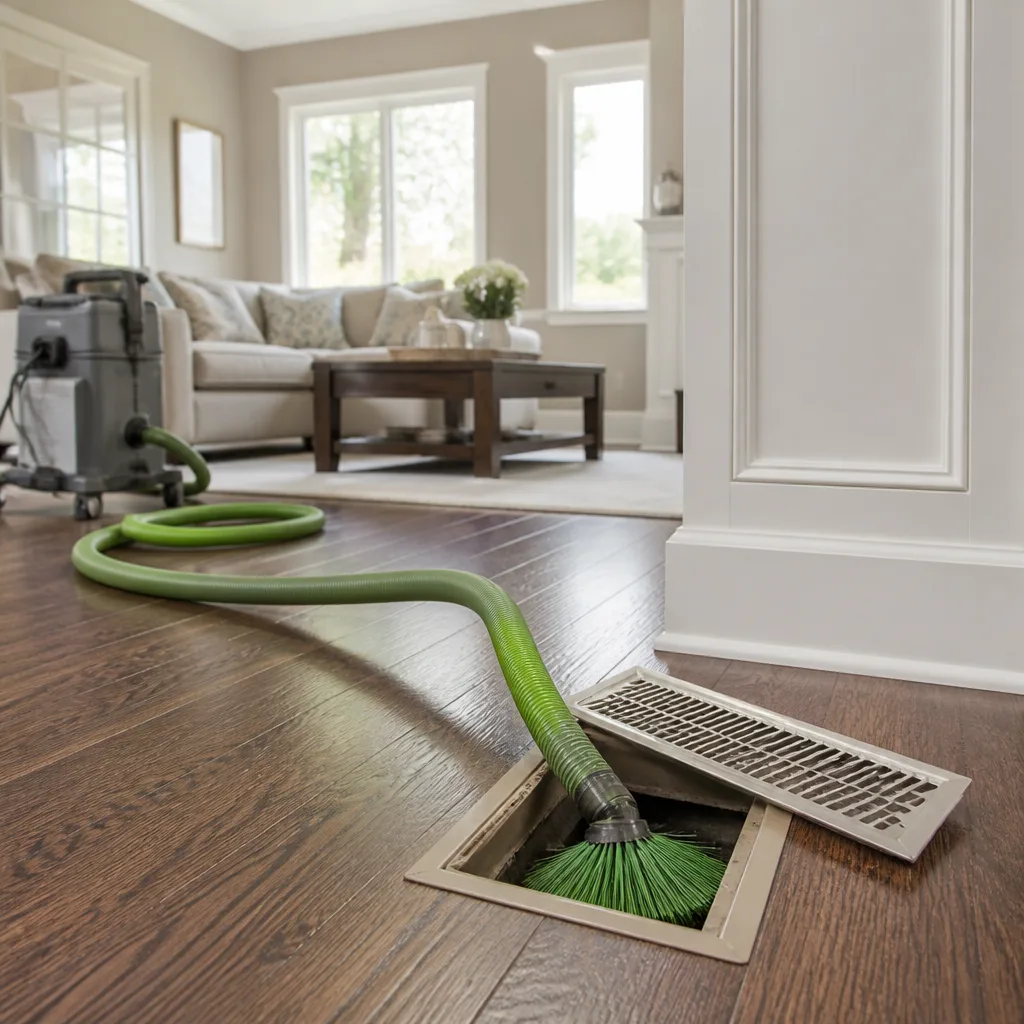 Whole-home duct cleaning
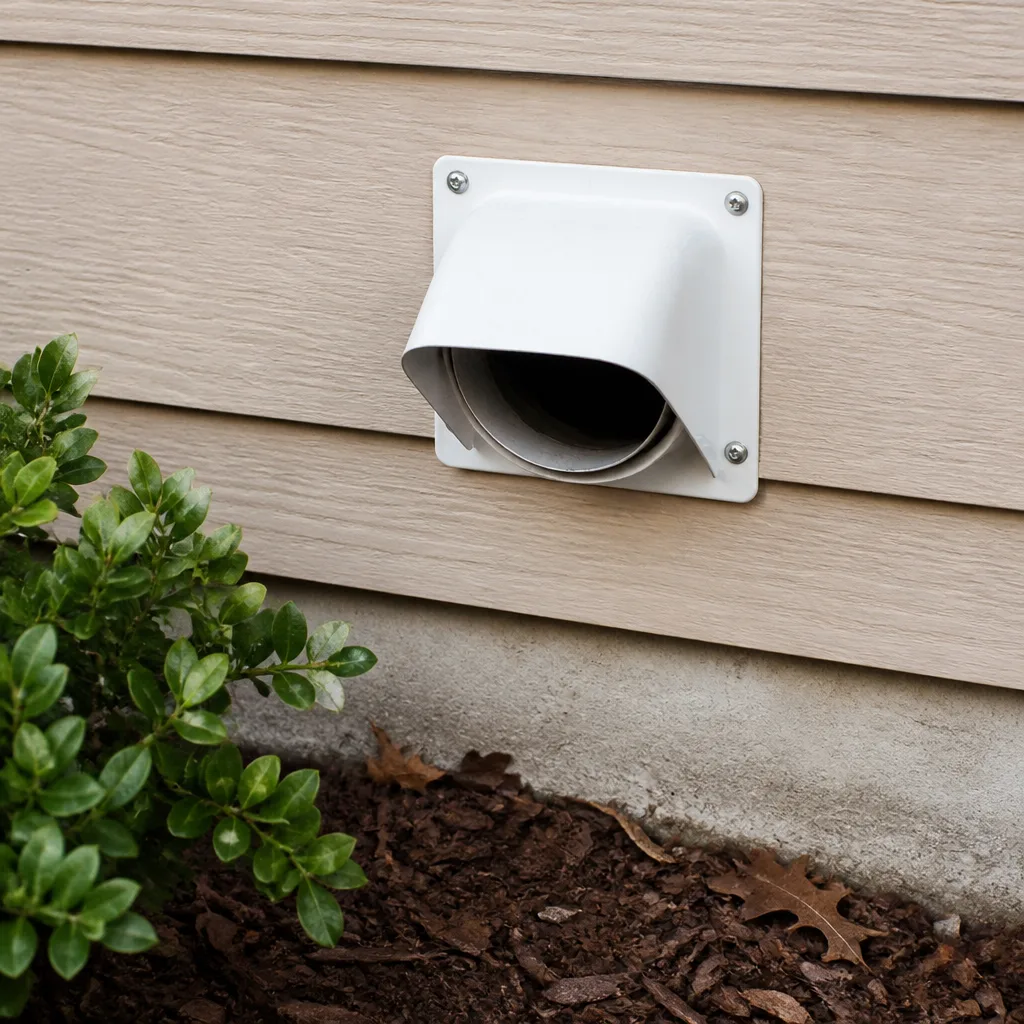 Dryer vent cleaning
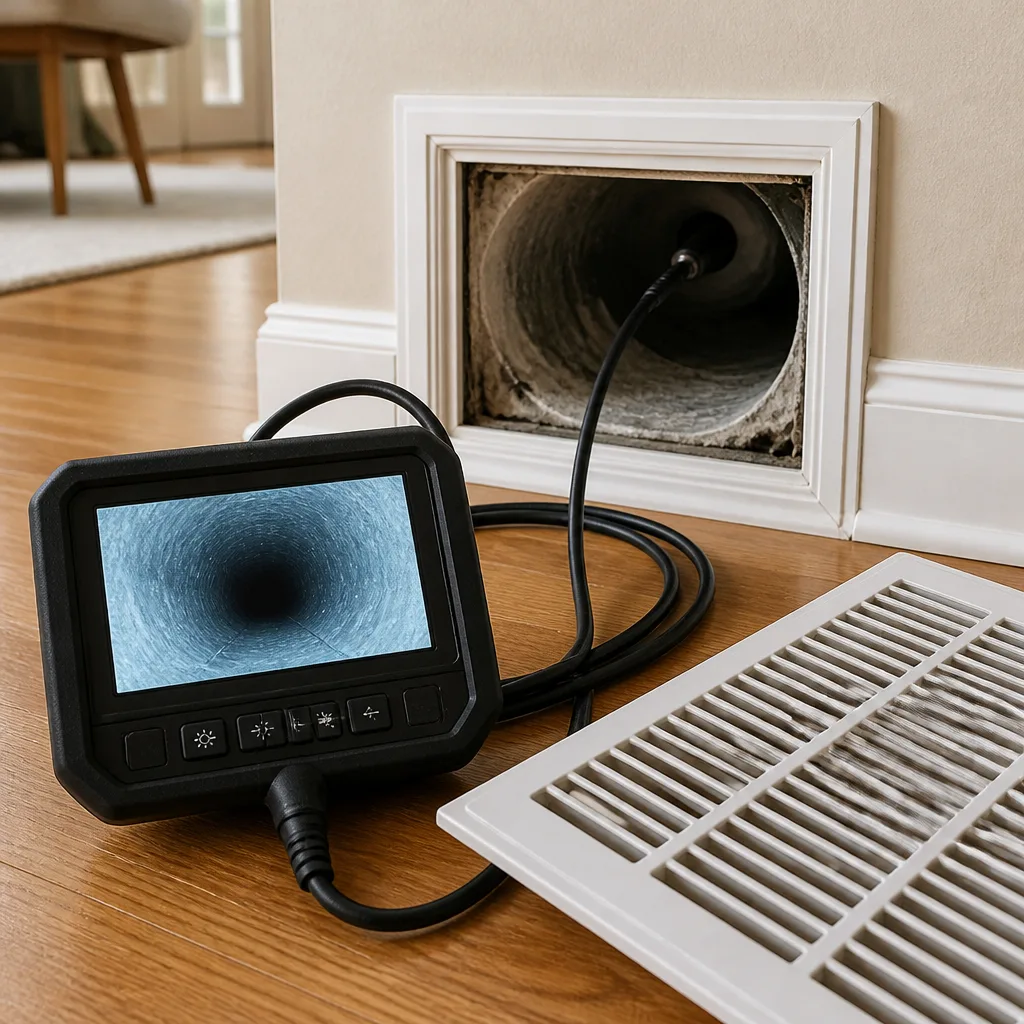 Camera inspection
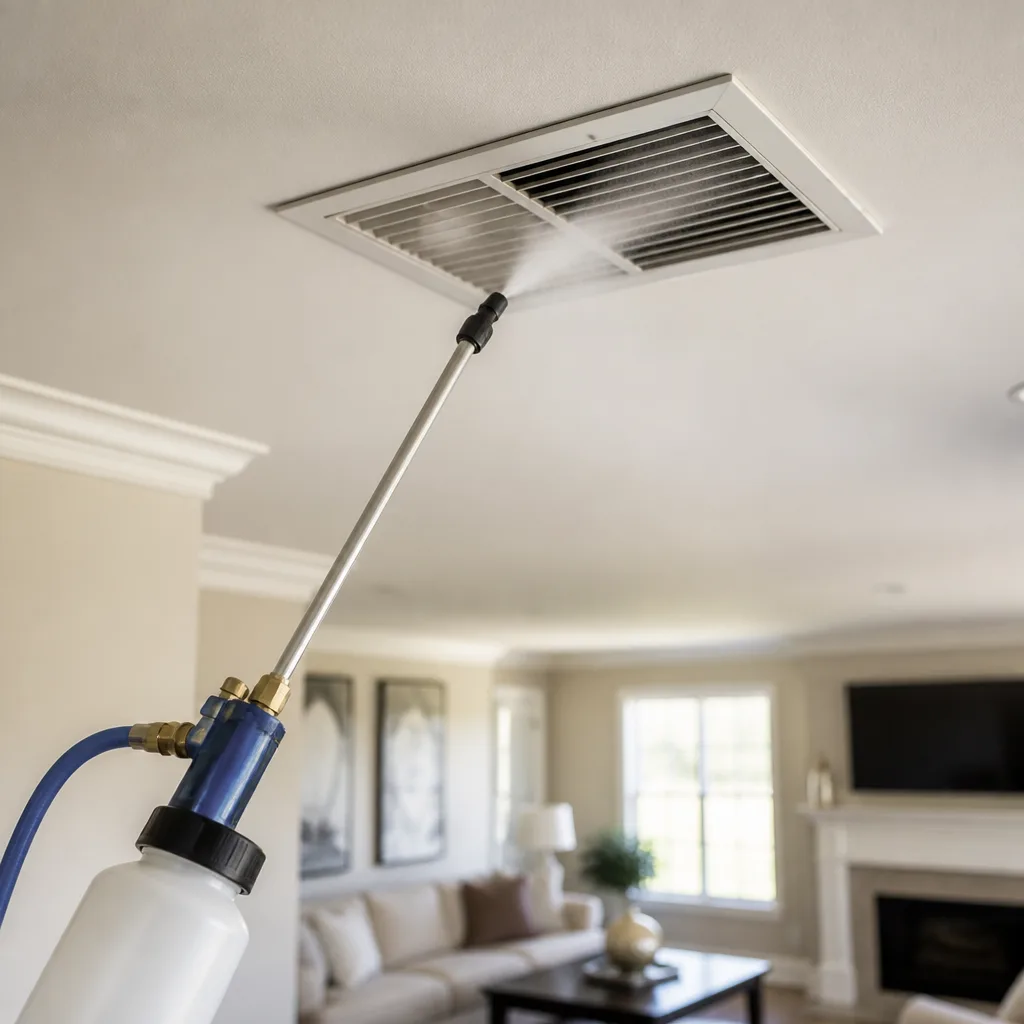 Sanitizing & deodorizing
Whole-system duct and dryer vent check with before-and-after photos - you see exactly what came out of your vents
That "$99 whole-house special" is a bait ad - the real number appears once they are in your hallway, or the "clean" is a shop-vac at the register. We photograph the inside of your ducts before and after instead.
Air Duct Cleaning Maintenance Checklist for Tempe Homeowners
Most homeowners treat duct maintenance as a filter reminder. Change the filter, forget the ducts, repeat. That’s the misconception this guide corrects. Your duct system is a mechanical asset, and it has inspection intervals, pass/fail criteria and failure modes just like any other piece of equipment in the house. Here in Tempe, the operating environment is unusually punishing: long cooling seasons, a pre-monsoon dust surge that loads return-side surfaces, and a post-monsoon humidity window that can leave moisture where dust already settled. What follows is a real checklist, organized by month, quarter and year, with the specific things to look at and the specific signs that mean stop and call someone.
Quick Answer
A workable air duct maintenance checklist for Tempe homeowners has three tiers: monthly checks of filters, registers and airflow at the furthest vents; quarterly inspection of accessible flex duct connections and the air handler access panel; and an annual professional cleaning plus a documented airflow and contamination assessment. Pair that schedule with a full system cleaning every two to three years, sooner if you’re near active construction or a dusty undeveloped lot edge. The point isn’t busywork. It’s catching restriction and disconnection before the system compensates by running longer and harder.
Styles & brands we work with
- Whole-home duct cleaning
- Dryer vent cleaning
- Camera inspection
- Sanitizing & deodorizing
Table of Contents
- Why Duct Maintenance Works Differently in Tempe
- Monthly Checklist: What to Look at Every Month
- Quarterly Checklist: Connections, Panels and Airflow Tests
- Annual Checklist: The Full Assessment
- Pass/Fail Criteria: Registers, Flex Duct and Air Handler Panels
- The Tissue Test and a Simple Pressure Reading
- What to Photograph Before and After Every Service
- Keeping Filtration Effective Between Cleanings
Why Duct Maintenance Works Differently in Tempe
The general advice you’ll find online was written for a four-season climate with a long heating season and a short cooling season. Tempe runs the opposite pattern. Cooling dominates the year, which means the air handler and the supply side of the duct system are working far more total hours than the national average assumes. Dust that settles on a return-side surface gets pulled across it continuously rather than seasonally.
Then there’s the calendar. The weeks before monsoon arrival are the dustiest stretch of the year in the Valley. Fine particulate that accumulates on exposed surfaces, patio furniture and window sills is the same material your return is drawing in. Once the monsoon humidity window opens, that settled dust can hold moisture in places that don’t dry quickly, particularly in duct runs through unconditioned attic space. That’s the mechanism behind the musty smell a lot of Tempe homeowners notice in July and August and can’t place.
A third local factor is construction. Tempe has ongoing infill and redevelopment, and homes near an active site draw in drywall dust and concrete fines that a standard filter won’t fully stop. If there’s a project within a few blocks, your cleaning interval should shorten.
None of this means every Tempe home needs aggressive intervention. It means the schedule should be built around the local calendar rather than a generic national one. Front-load your inspection work into late spring, so you’re catching restriction before the heaviest cooling load arrives.
Monthly Checklist: What to Look at Every Month
These tasks take fifteen minutes. Do them on the same day each month so you don’t lose track.
- Filter condition. Hold the filter up to a light. If you can’t see light through the pleats across most of the face, replace it. In Tempe’s dust season, a filter that would normally last three months can load in six weeks.
- Return grille loading. Look at the return grille face and the frame behind it. Visible matting of lint and dust on the grille is a sign the return is working hard and the filter is being bypassed around its edges.
- Supply register airflow by hand. With the system running, hold your hand at each supply register for a few seconds. You’re not measuring, you’re comparing. Note any register that feels noticeably weaker than the others.
- Temperature split check. A cheap infrared thermometer pointed at a supply register and at the return grille gives you a rough delta. If that number drifts from what it usually reads, something changed.
- Odor check. Walk the house with the system running and note any room that smells musty or dusty. Odor that appears only when the fan runs points at the duct pathway, not the room.
- Condensate check. Look at the drain pan and the primary drain line at the air handler. Standing water or algae growth is a moisture problem that will feed the duct system if it isn’t addressed.
Write the results down. A single month tells you little. Three months of notes tells you whether a register has been slowly losing airflow or whether last month was an outlier.
Quarterly Checklist: Connections, Panels and Airflow Tests
Quarterly is where you move from observation to inspection. You’re looking at the parts of the system a homeowner can safely reach without opening anything energized.
- Accessible flex duct runs. In attics, garages and crawl spaces you can safely enter, look at every flex duct connection you can see without moving insulation or disturbing anything. Check that the inner liner is intact and that the outer jacket is sealed to the collar with mastic or approved tape, not just a zip tie.
- Sagging and kinked runs. A flex duct that sags sharply or makes a tight bend is restricting flow. The rule of thumb is that a bend should be as gentle as the duct allows.
- Air handler access panel. Confirm the panel is seated and its fasteners are engaged. A panel that’s been left loose or has a torn gasket pulls unconditioned attic air straight into the return.
- Register and grille fasteners. Loose grilles rattle and leak. Check screws at every supply and return you can reach.
- Dryer vent exterior termination. Look at the outside hood. The damper should move freely and there should be no lint mat visible at the opening. This is the cheapest fire-risk check in the house.
- Tissue test at each register. Described in detail below. Run it quarterly and record the result.
If you find a disconnected or crushed run during the quarterly pass, don’t tape it and move on if the damage is more than superficial. A crushed inner liner or a joint that’s pulled apart inside the insulation needs a proper repair, which is a different job than a cleaning. That’s why we offer air duct repair as a standalone service rather than handing homeowners a report and leaving.
Annual Checklist: The Full Assessment
Once a year, ideally in late spring before the cooling season peaks, do a full assessment. This is also the point to schedule professional service if it’s due.
- Full visual inspection of every accessible duct run. Note insulation condition, joint integrity and any evidence of moisture staining.
- Contamination assessment. Look inside a supply register boot and a return drop with a flashlight. A light film of dust is normal. Visible accumulation, debris, or discoloration that suggests biological growth is not, and it changes the recommendation.
- Airflow baseline. Record a static pressure reading at the air handler if you have a manometer, or record your tissue-test results at every register. Keep the numbers year over year.
- Professional cleaning if due. A full system cleaning, done with mechanical agitation and negative pressure, resets the baseline. Consumer-grade vacuums don’t do this; the method matters more than the promise.
- Filtration review. After a cleaning is the right time to review whether your filter setup is actually matched to the system. We work with Honeywell and Aprilaire equipment for whole-home filtration because clean ducts only stay clean if the filtration keeps up.
- Documentation pass. Photograph what you can see before service and after. More on this below.
Pass/Fail Criteria: Registers, Flex Duct and Air Handler Panels
Vague instructions like “check for dust” aren’t useful. Here’s what actually constitutes a pass and a fail.
Supply and Return Registers
- Pass: Grille face clean or lightly dusty, fasteners tight, no visible gap around the frame, airflow consistent with the same register last quarter.
- Fail: Visible matting or debris on the grille or in the boot behind it; a gap around the frame that lets room air bypass the register; airflow noticeably weaker than the same register last quarter; soot-like dark staining around the edges.
Flex Duct Connections
- Pass: Inner liner intact and smooth at the collar, outer jacket sealed with mastic or approved tape, gentle bends, no sagging beyond what the support strapping allows.
- Fail: Inner liner torn, collapsed or separated from the collar; outer jacket unsealed at any joint; sharp kink or compression; visible condensation or moisture staining on the jacket.
Air Handler Access Panels
- Pass: Panel seated flush, fasteners engaged, gasket intact and pliable, no air movement felt at the panel seams while the system runs.
- Fail: Panel loose or missing fasteners, gasket torn or compressed flat, air felt escaping at seams, insulation visible inside the cabinet where it shouldn’t be.
Two or more fails in the same category is your signal to bring in a professional assessment rather than continue patching. If the fails involve moisture, stop and address it before anything else.
The Tissue Test and a Simple Pressure Reading
You don’t need instruments to catch developing airflow restriction. You need a tissue and a few minutes.
The tissue-paper test
- Turn the system fan to ON so it runs continuously without cooling.
- Hold a single-ply tissue flat against a supply register grille, centered.
- Release. The tissue should be held firmly to the grille by airflow and stay there.
- Repeat at every supply register in the house and note any register where the tissue falls away or barely sticks.
What you’re looking for is inconsistency. A register that once held the tissue and now doesn’t has lost airflow. That’s worth investigating before the cooling season starts. Do the same test at your return grille; a strong pull there is normal, a weak one suggests a restriction upstream.
A simple static pressure reading
If you want a number instead of a feel, a basic handheld manometer with a static pressure probe reads total external static pressure at the air handler. Record the value each quarter. A number that climbs over time indicates increasing restriction, typically filter loading, coil fouling or duct leakage. You don’t need to interpret the number in detail. The trend is the message. If the reading is climbing, that’s your cue to schedule service rather than guess.
We use this same logic on a bigger scale. Air duct cleaning with a rotary-brush system and negative-air capture resets the system to a known baseline. From there, your quarterly readings tell you whether it’s holding.
What to Photograph Before and After Every Service
You’re paying for work you can’t see inside the ducts. Documentation is how you close that gap and how you hold any contractor accountable.
Before the technician starts, photograph:
- Every supply and return register grille, in place, from a consistent angle.
- The inside of one supply boot and one return drop with a flashlight, if you can safely reach them.
- The air handler access panel and the filter in place with its condition visible.
- Any duct run you’re specifically concerned about.
After the work, photograph the same list, same angles. Then ask for the contractor’s own before-and-after photos of your ducts, taken inside the system during the work. Any professional operation captures those images as part of the job. We provide them as standard, because the alternative is asking a homeowner to trust a claim they can’t verify.
Keep the photos wherever you keep your home records. When you sell, or when you need to file a homeowner insurance claim, a dated set of duct photos is genuinely useful.
Keeping Filtration Effective Between Cleanings
Clean ducts are the starting point. The right filtration keeps them that way, and it’s the part most homeowners under-manage.
Standard pleated filters are fine for protecting equipment, but they don’t filter the air the way a whole-home system does. That’s the reason we use and recommend Honeywell and Aprilaire equipment for homeowners who want filtration to actually perform: these are filtration systems designed to integrate with the return pathway, not just screens at the grille.
Between full cleanings, this is what keeps filtration working:
- Replace filters on schedule, not on appearance. A filter always looks dirty when you check it. Follow the interval and let the light test tell you when to pull it early.
- Don’t over-filter a system that can’t handle it. A filter with a very high MERV rating can restrict airflow in an older system. If your quarterly pressure reading climbs after a filter change, that’s your signal.
- Seal the filter frame. Air that bypasses around a filter edge carries everything the filter would have caught. Check the frame for gaps and seal it.
- Contain dust-generating work. If you have drywall, tile or flooring work happening in the house, isolate the work area and consider a temporary filtration setup. This is where Abatement Technologies air filtration equipment earns its place: it’s the same class of equipment used in professional containment work, and it keeps dust from entering the system in the first place.
- Address the return grille location. A return near a floor with heavy activity draws more dust. Clean the grille face and the surrounding area, not just the filter.
For the other big air-movement vector in your house, our dryer vent cleaning service addresses lint accumulation that a monthly filter check won’t touch.
Common Mistakes to Avoid
- Assuming the filter is the whole maintenance picture. Filters protect equipment. Ducts move air. They’re separate systems with separate schedules, and only one of them gets checked in most homes.
- Taping over a problem instead of repairing it. Duct tape on a joint looks like a fix and usually isn’t. If a joint has pulled apart inside the insulation, tape on the outside does nothing.
- Skipping the pre-monsoon window. In Tempe, cleaning or inspecting in August is too late for the heaviest dust load. Front-load your inspection into late spring.
- Trusting a cleaning quote that doesn’t specify a method. A truck-mounted whip or a shop vac isn’t the same job as rotary-brush agitation combined with negative-air capture. Ask what equipment is used before you book.
- Neglecting the return side. Most homeowner attention goes to the supply registers. The return is where the dust actually loads first, and it’s the first place to look.
- Ignoring the dryer vent because it seems fine. Lint accumulation in a concealed vent run can’t be checked by eye at the hood alone. This one is a fire risk, not a maintenance afterthought.
- Closing registers in rooms you don’t use. It’s tempting, and it increases system static pressure while reducing overall performance. In a cooling-dominated climate, doing this consistently makes the system work harder.
See the difference
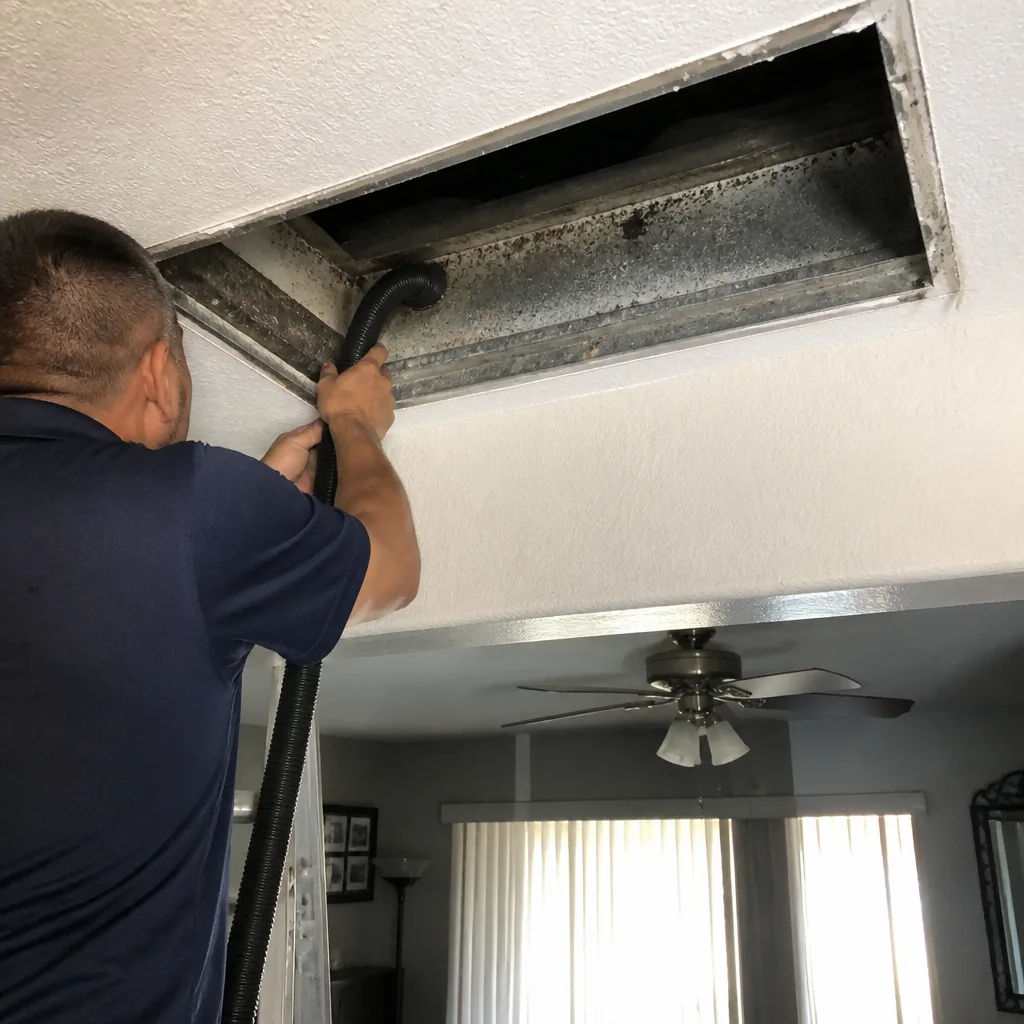 Before
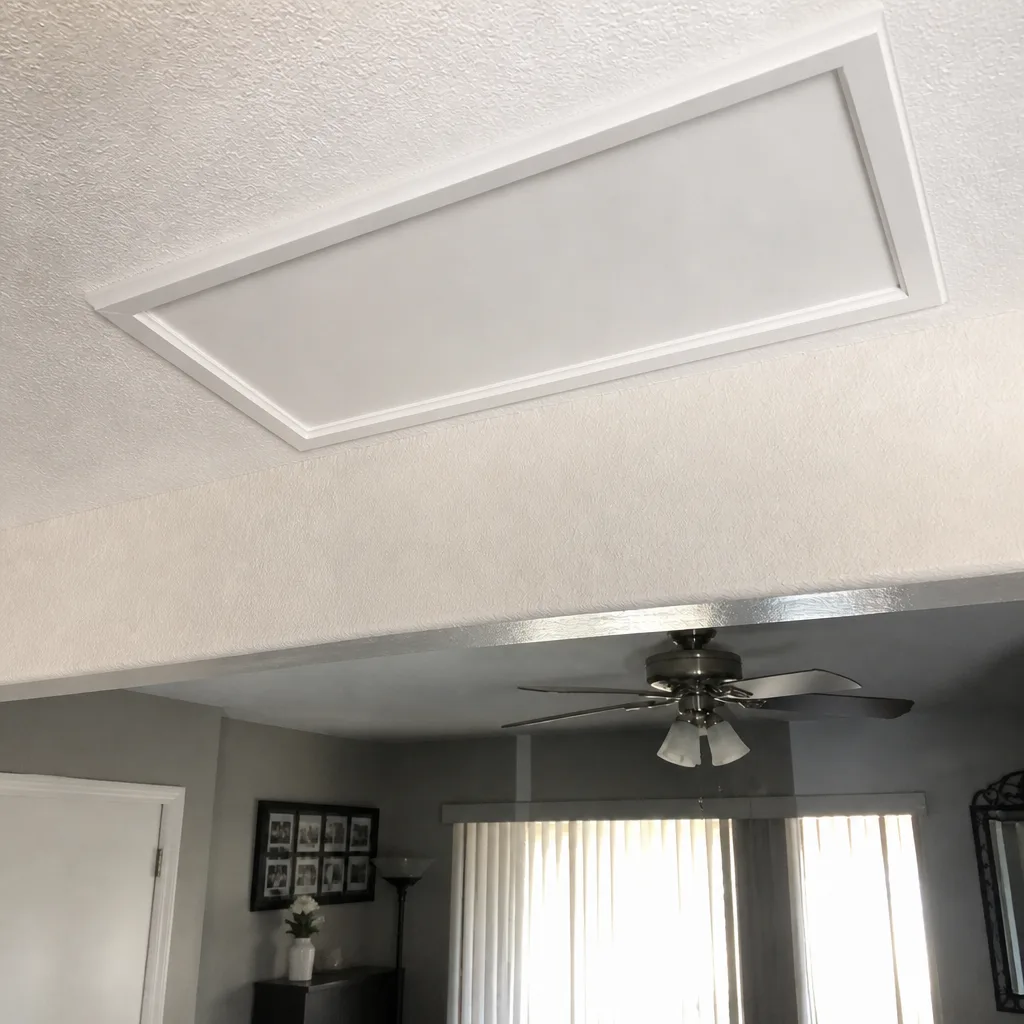 After
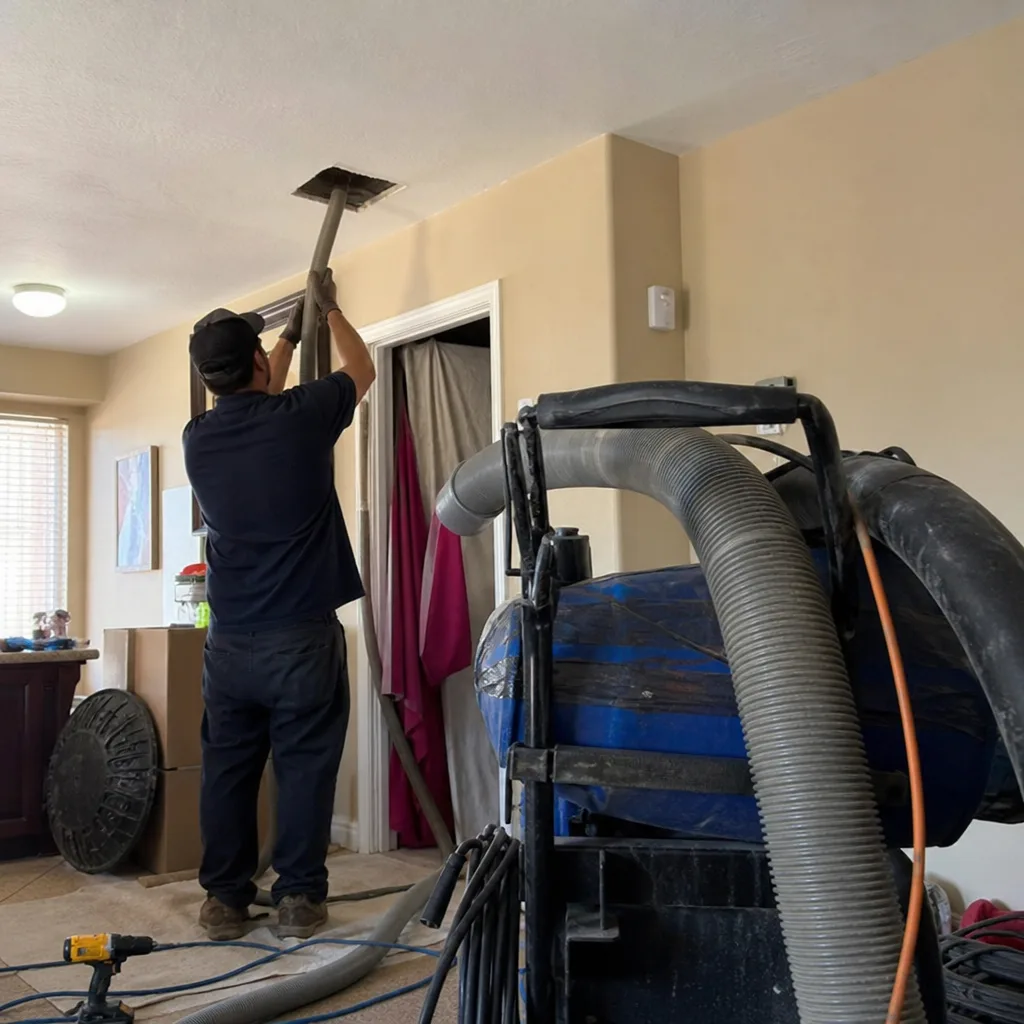 Before
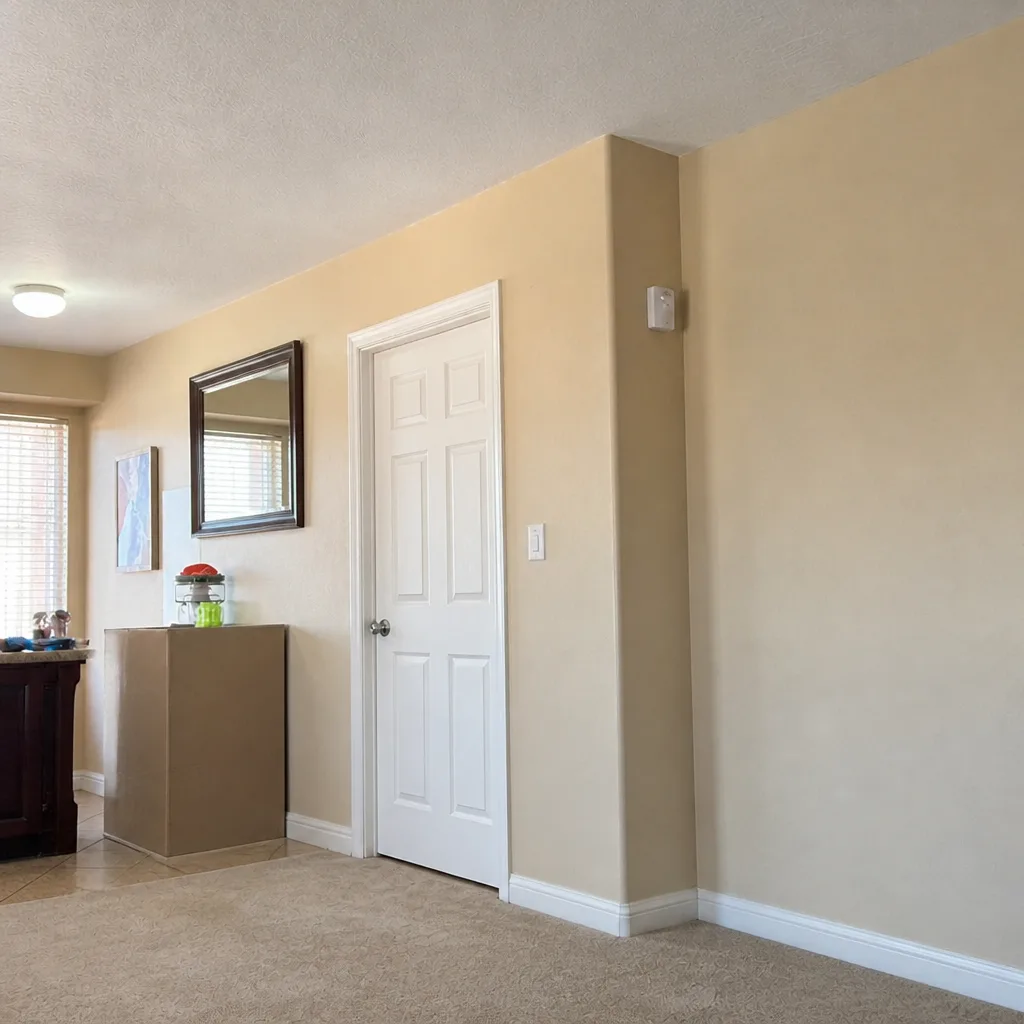 After
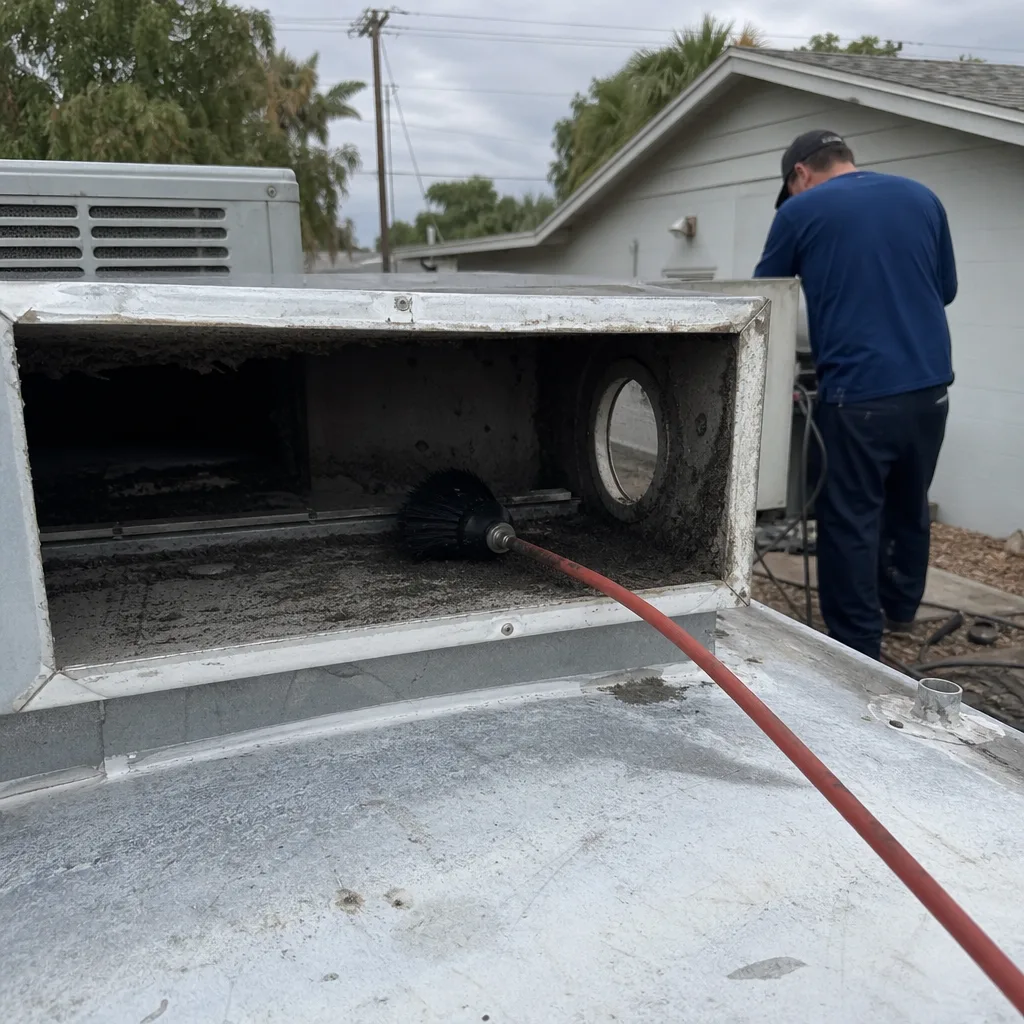 Before
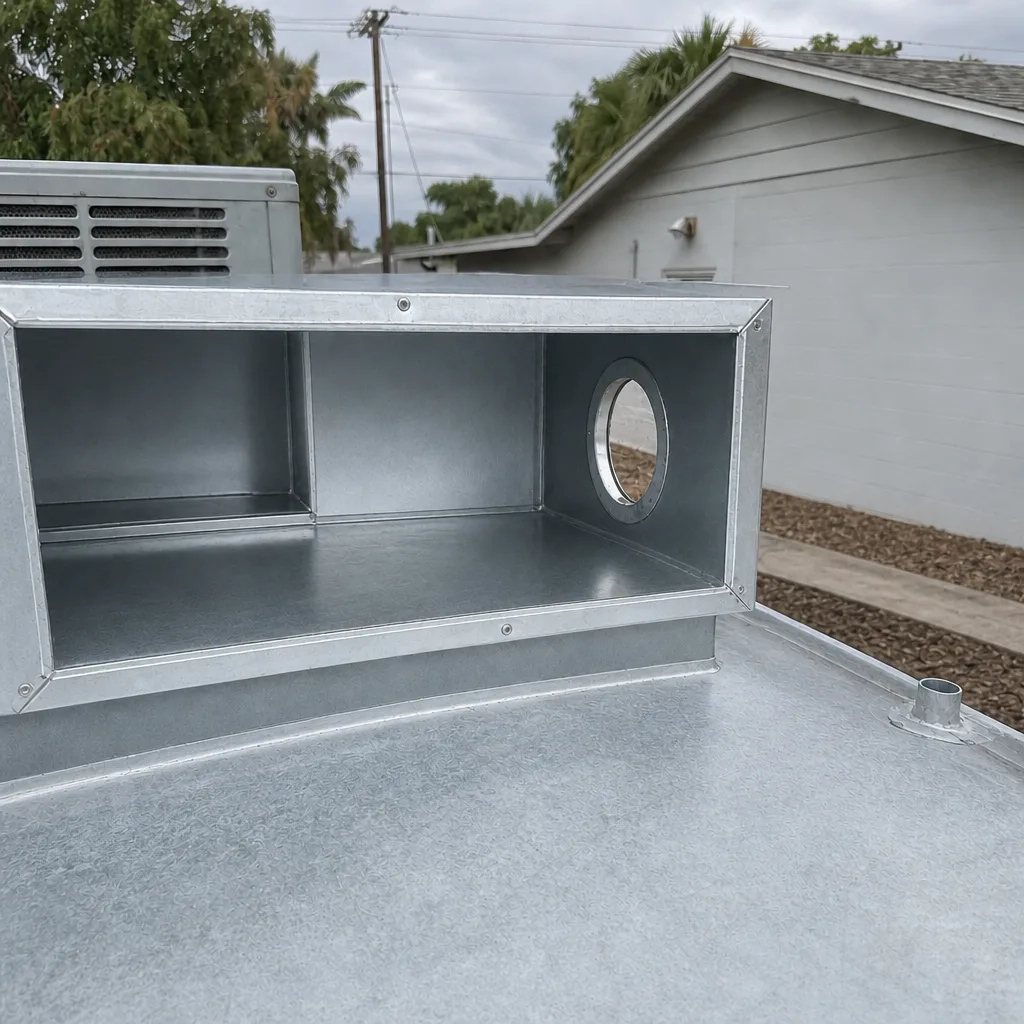 After
When to Call a Professional
Call a professional if you find any of the following: visible debris in a supply boot or return drop, moisture staining or musty odor that returns after cleaning, a flex run that’s disconnected, crushed or torn, an airflow drop at two or more registers confirmed by the tissue test, a rising static pressure reading across two quarterly checks, or a dryer vent that hasn’t been inspected. Also call if a home is new to you and you have no documentation of prior duct service.
Here in Tempe, our approach is to clean with mechanical agitation and negative pressure, document what we find, and repair what’s broken rather than hand you a report and leave. Duct Cleaning Tempe offers free estimates in Tempe. Call (866) 261-1801. We answer 24/7. Fast dispatch from 7am to 7pm, Sunday through Friday.
Frequently Asked Questions
A full cleaning every two to three years is the typical interval for a Tempe home, and sooner if you’re near active construction, have pets, or notice a musty smell after monsoon season. The annual assessment checklist in this guide catches the conditions that shorten the interval, so you’re not guessing.
A rotary-brush system mechanically agitates duct surfaces to dislodge adhered debris, while a negative-air machine captures the debris at the source so it doesn’t redistribute into the house. That combination is the reason professional cleaning resets a system while a shop vac doesn’t. The equipment matters more than the description on the invoice.
Ask for before-and-after photos taken inside the system during the work. That’s the only way to verify a claim. Keep your own photos too, of every register and the filter, from a consistent angle. If a contractor won’t provide internal images, that tells you something. Call (866) 261-1801 for a free estimate and we’ll explain exactly what you’ll receive.
Cheap quotes typically mean less equipment, less time, or both. A rotary-brush setup plus negative-air capture plus proper containment is a different investment than a truck-mounted whip or a shop vac. Ask what method and what equipment each quote covers. We set one flat price per system before work starts, so the number on the estimate is the number you pay.
Dryer vents should be inspected at least once a year and cleaned when lint accumulation is present. It’s a separate fire-risk issue from the duct system, and it’s worth scheduling at the same visit to save a return trip. Call (866) 261-1801 for an exact quote on both.
Sometimes. Uneven airflow is often caused by a disconnected, crushed or leaking duct run rather than contamination, which is why a cleaning alone may not solve it. A proper assessment identifies restriction and disconnection first. If a run is compromised, a repair is the fix. We offer both in a single visit scope.
The Bottom Line
Your duct system is a mechanical asset with an inspection schedule and real pass/fail criteria, not a filter reminder you set and forget. In Tempe specifically, that schedule is calibrated around a pre-monsoon dust surge and a post-monsoon moisture window, and it works best when the heavy inspection is done in late spring. Monthly checks catch filter loading and weak registers. Quarterly passes catch duct disconnection and panel leaks. Annual assessments catch everything else before the cooling season stresses it. Document with photos every time, keep your airflow readings year over year, and treat airflow restriction as something to diagnose rather than ignore. The payoff is a system that runs efficiently because the pathway is intact and maintained.
Duct Cleaning Tempe connects homeowners with independent local professionals for cleaning, dryer vent work and repair, using professional-grade equipment including Rotobrush, Nikro, and Abatement Technologies. Call (866) 261-1801 for a free estimate. We answer 24/7. Fast dispatch from 7am to 7pm, Sunday through Friday. You can also review our service overview for Tempe.
Written by the team at Duct Cleaning Tempe.